Prosthetic feet donated to the Walking Unidos Clinici in León, Nicaragua.
Since 1998 I have worked as a volunteer with The Polus Center for Social and Economic Development, whose international programs assist people with disabilities in developing countries. On over a dozen trips to Central America and Africa, I have photographed the development of the Walking Unidos prosthetics clinic and other projects.
Nicaragua’s revolution and civil war left 30,000 people dead and more injured. That legacy continues, as unexploded ordnance and landmines still kill and injure civilians. Nicaragua is also a country of crushing poverty, which compounds the difficulties faced by people with disabilities.
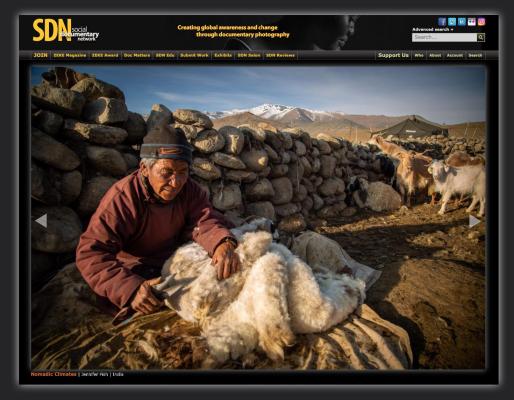
Losing a limb often means losing the ability to earn a living, to get an education, to acquire new job skills. Receiving a prosthetic limb or wheelchair is of life-changing significance to individuals, families, and communities. It can determine whether someone can rebuild their life and become self-reliant, or will instead remain dependent and indigent.


In 1998, friend and fellow artist Gregory Stone asked if I might be interested in documenting the work of a group with which he was involved – a group that was looking into issues of limb loss and prosthetics in Nicaragua. I volunteered, and spent ten days that spring traveling throughout Nicaragua with a group comprised of a few staff members from The Polus Center for Social and Economic Development, and many volunteers.
We met with individuals, with community and religious leaders, government representatives, and medical personnel. I photographed in streets, homes, hospitals, clinics, and places of work.
I had traveled extensively before that time, but I did not anticipate the intensity of my response to what I experienced in Nicaragua. In the late 1970’s, Nicaragua experienced a revolution that overthrew the regime of president Anastasio Somoza. A civil war followed, and together these conflicts left some 30,000 people dead and countless more injured. That legacy continues, as unexploded ordnance and land mines left over from the conflicts still kill and injure civilians. Nicaragua is also a country of crushing poverty, which compounds the difficult circumstances already faced by people with disabilities.

Since that first visit to Nicaragua, I have made more than a dozen trips to Central America and one to Africa as a volunteer with The Polus Center, whose now-numerous international projects assist people with disabilities in developing countries. My initial interest in photographing to support their projects evolved into a desire to create images for myself as an artist as well.
In 1999 the Walking Unidos prosthetics clinic opened in León, Nicaragua; in 2003 another clinic was established in Choluteca, Honduras, and in 2004 a third was started in Managua, Nicaragua. A wheelchair workshop has also been started at a vocational school in León. These facilities are staffed and run by local people; they provide employment and training as well as products and treatment.
Opportunities for paid work are few in Nicaragua, and what little work available is typically very physical in nature. Though the government’s policies appear to respect the rights of the disabled, in practice, a lack of financial resources often means that a Nicaraguan with a disability is left at a severe disadvantage regarding employment, mobility, and access to the community. Losing a limb often means losing the ability to earn a living, to get an education, to acquire new job skills. Thus the possibility of receiving a prosthetic limb or a wheelchair is of life-changing significance to individuals, their families, and their communities. It can determine whether someone can rebuild his or her life and become self-reliant, or will instead remain dependent and indigent.

To license this work for editorial, creative, or other uses, click on the OZMO logo above.

This will take you to the Ozmo website where you can review the cost and license for the photographs in this exhibit.

You will need to create an account with both Amazon payments and with the Ozmo website as described on the Ozmo website.

International cooperation, International justice, Civil rights, Discrimination/Minority rights, Health/healing, The human condition, Global Health


The Polus Center for Social and Economic Development (www.poluscenter.org)

Stephen Petegorsky
172 North Farms Road, Florence, MA 01062 USA
petegorsky@external.umass.edu