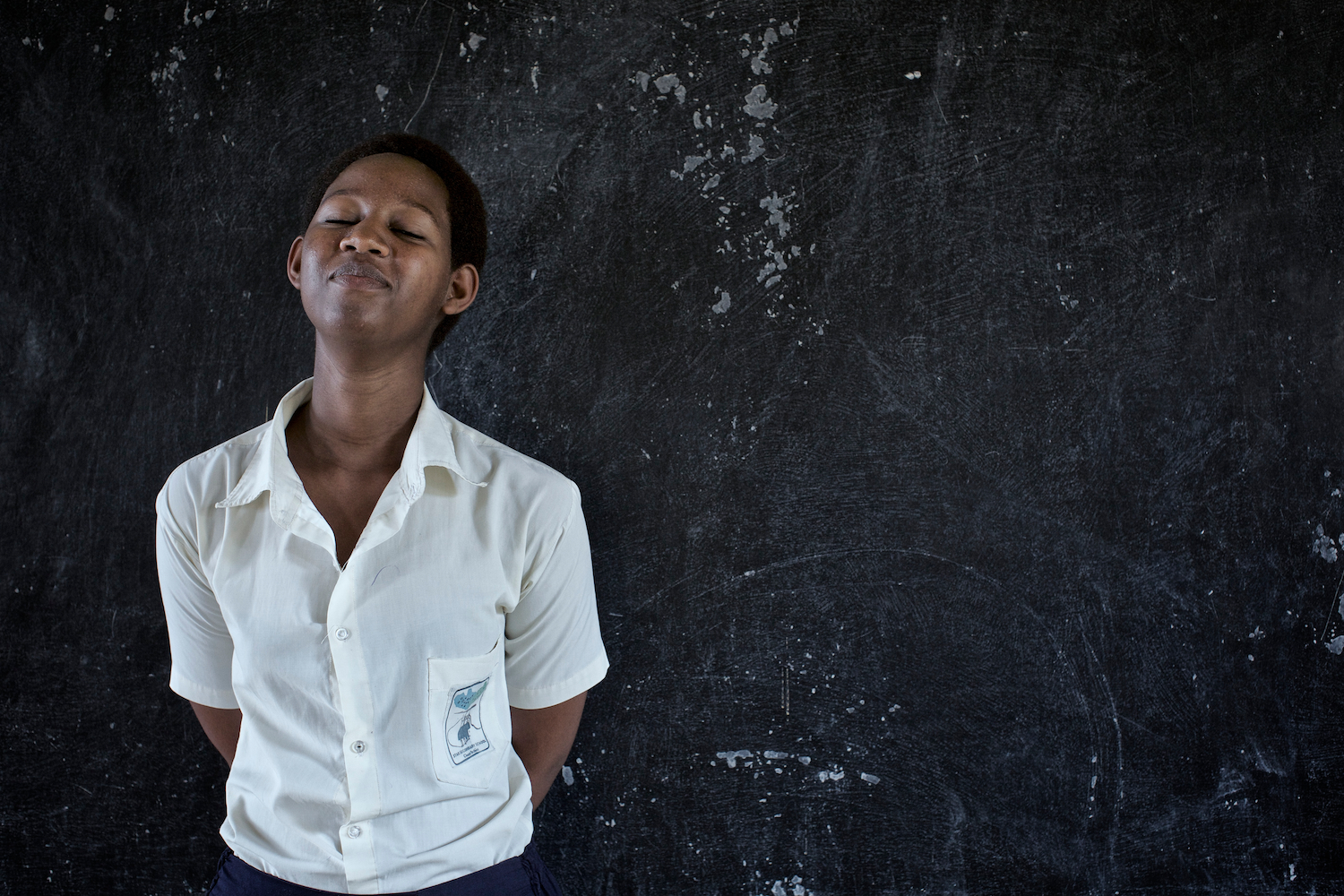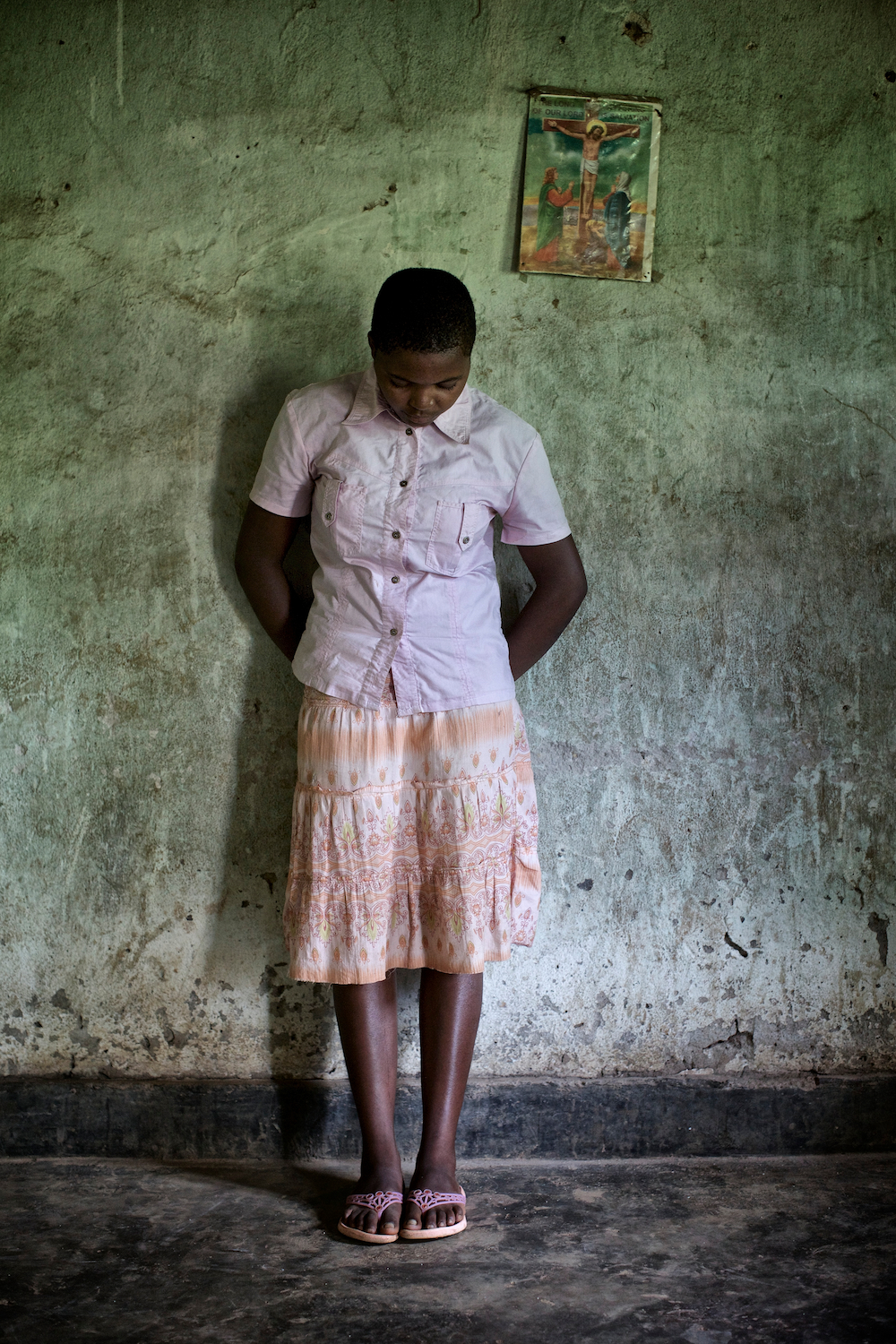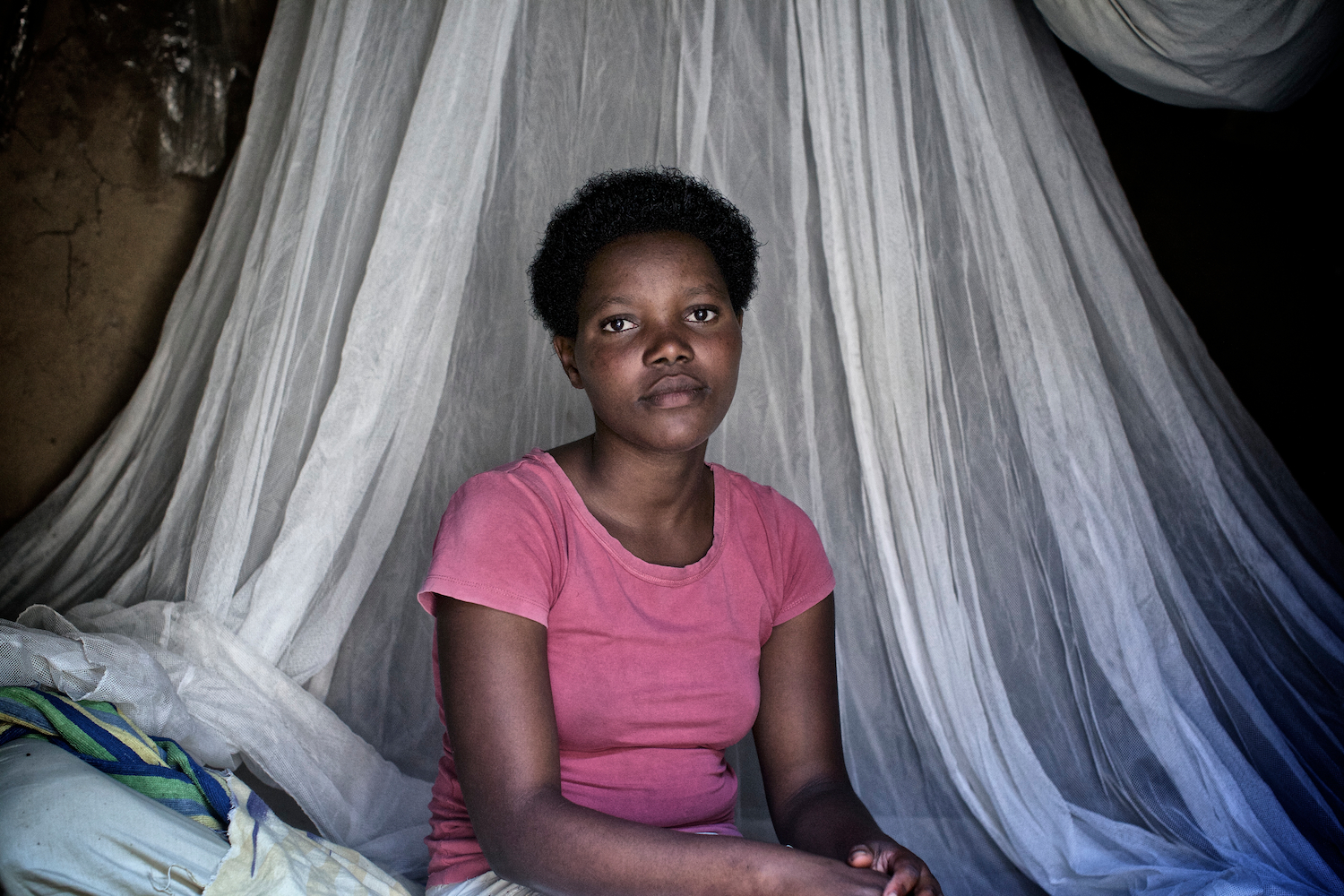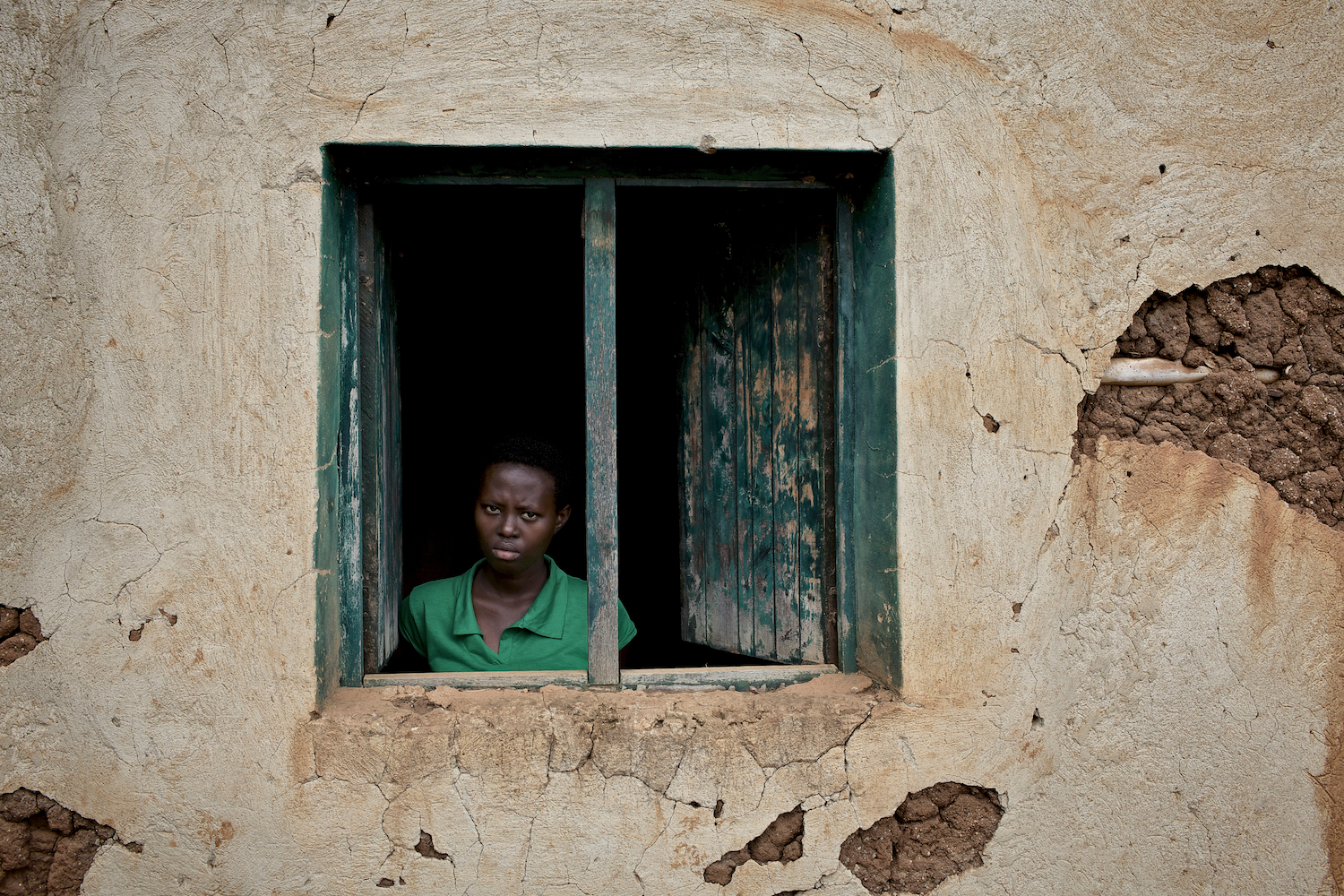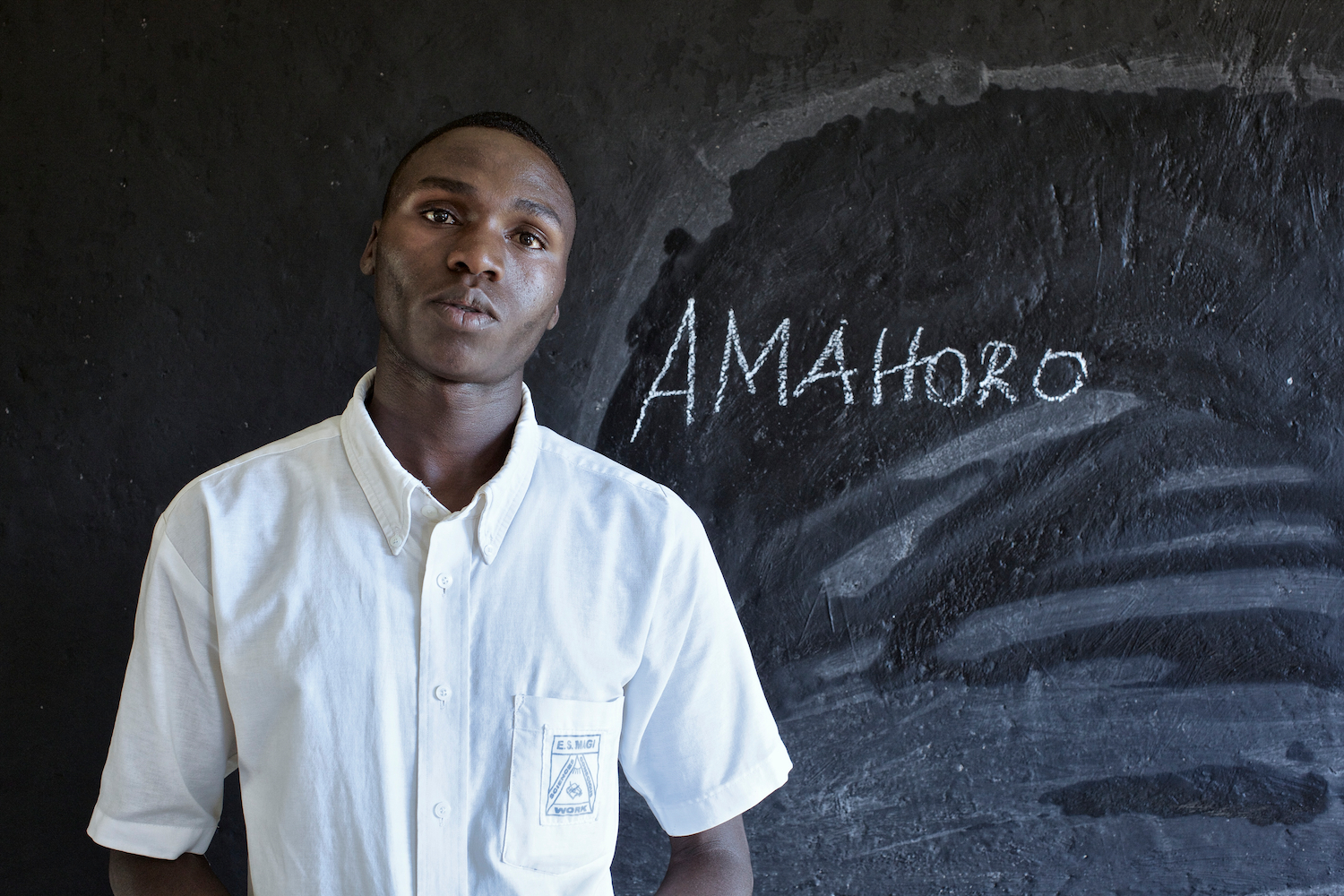
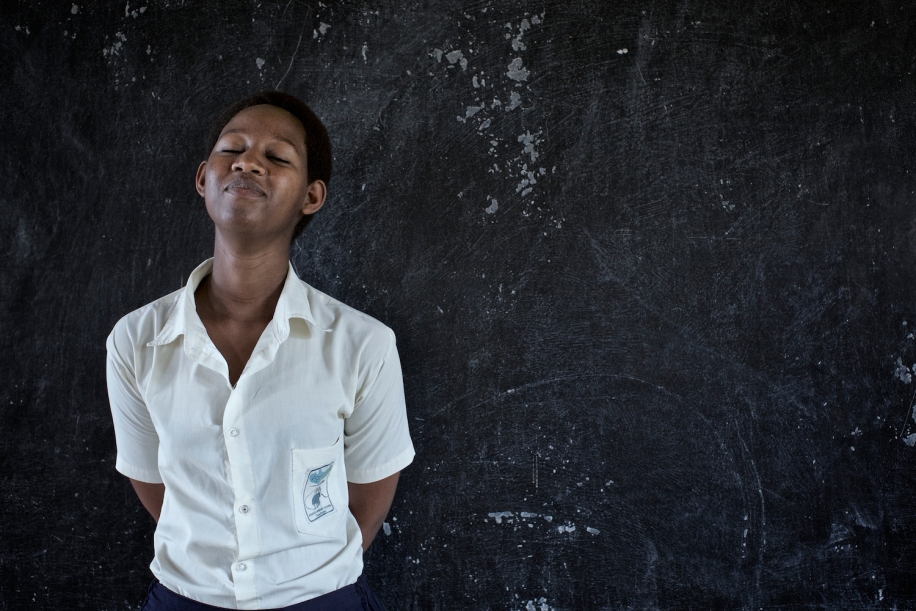

“I want to become the first female president of Rwanda”
-Jeanne Umutomi
Make Comment/View Comments
Additional Credits
Video
Photographer Statement
License
To license this work for editorial, creative, or other uses, click on the OZMO logo above.
This will take you to the Ozmo website retro toys where you can review the cost and license for the photographs in this exhibit.
You will need to create an account with both Amazon payments and with the Ozmo website as described on the Ozmo website.
Tags
Content loading...
Resources
Affiliated NGO
International Alert, London
Contact Photographer
carol@castorey.com
Stats
the AMAHORO generation the youth of Rwanda talk peace
Photographer: Carol Allen Storey
Exhibit Title: the AMAHORO generation the youth of Rwanda talk peace
Location: Rwanda
Born during the genocide era, Rwandan’s youth speak of their aspirations, and hope for peace in the aftermath of a brutal war that fractured their nation. They are the generation that wants to be acknowledged as Rwandese, united in purpose, eliminating historical tribal labels of Hutu and Tutsi. They want their legacy to be known as the Amahoro generation, the peace brokers; where the youth of their parent’s generation were brutal warriors.
They believe hatred corrodes morality.
Today’s youth have come together, united in purpose – much of their commitment to reconciliation is rooted in the idea that without peace, there is no future. They believe peace is the nucleolus, the steel platform to construct prosperity and harmony.
Amahoro, means peace; it is the youth’s anchor to pursue their destiny.
Born during the genocide era, Rwandan’s youth speak of their aspirations, and hope for peace in the aftermath of a brutal war that fractured their nation. They are the generation that wants to be acknowledged as Rwandese, united in purpose, eliminating historical tribal labels of Hutu and Tutsi. They want their legacy to be known as the Amahoro generation, the peace brokers; where the youth of their parent’s generation were brutal warriors.
They believe hatred corrodes morality.
Today’s youth have come together, united in purpose – much of their commitment to reconciliation is rooted in the idea that without peace, there is no future. They believe peace is the nucleolus, the steel platform to construct prosperity and harmony.
Amahoro, means peace; it is the youth’s anchor to pursue their destiny.
International Alert, London
carol@castorey.com
Content loading...
Make Comment/View Comments

“I want to become the first female president of Rwanda” -Jeanne Umutomi

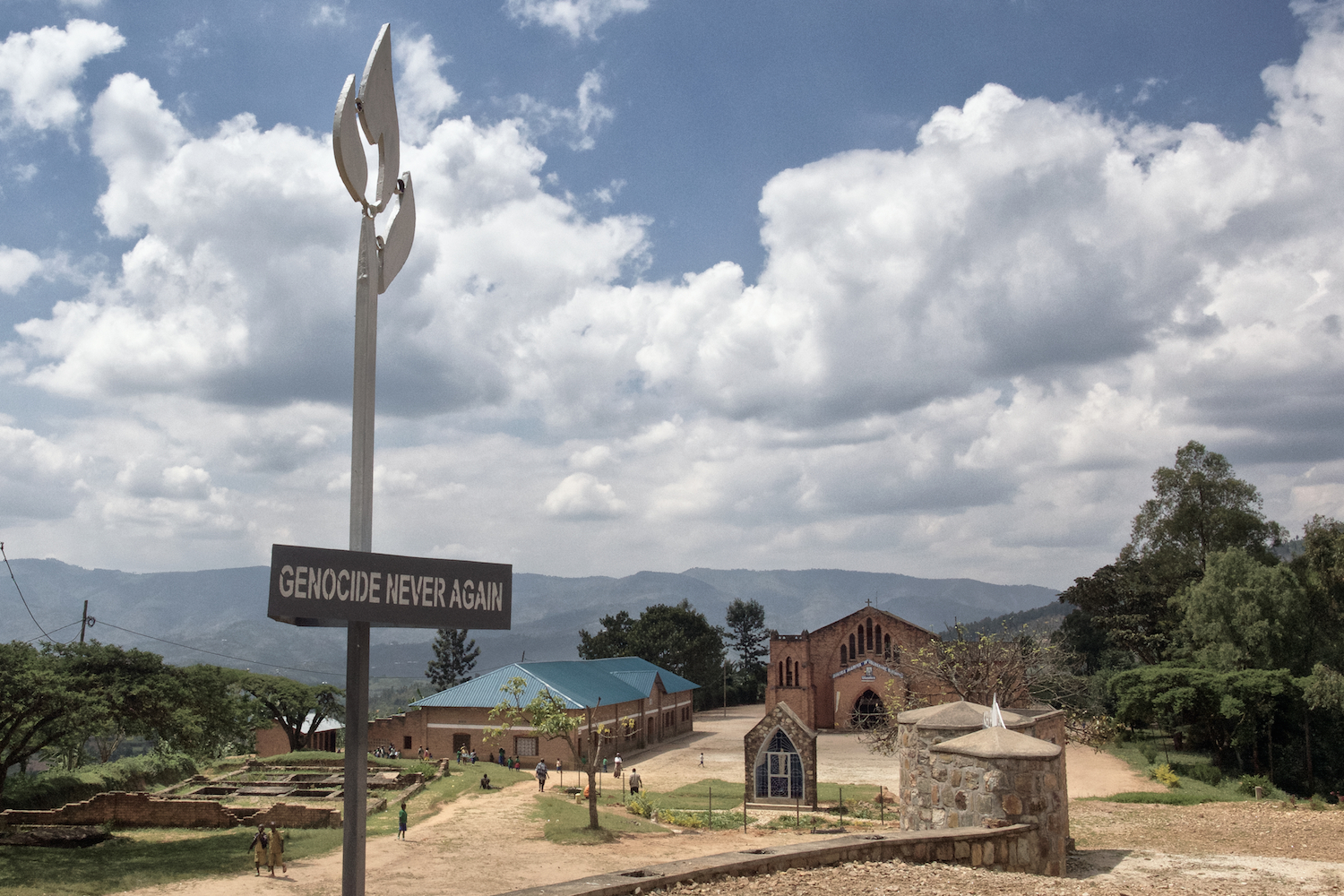
Viewed from the Kibilira Genocide Memorial, the Muhororo Catholic Church was one of the few that assisted in the early days of the genocide terror to protect the Tutsi and provided refuge but the Interahamwe were unstoppable in their frenzy for slaughtering the ‘cockroaches’ as the Tutsi were known. Thousands lost their lives. The genocide memorial, nestled close to the church provides a respite and reminder of lives lost in the church.

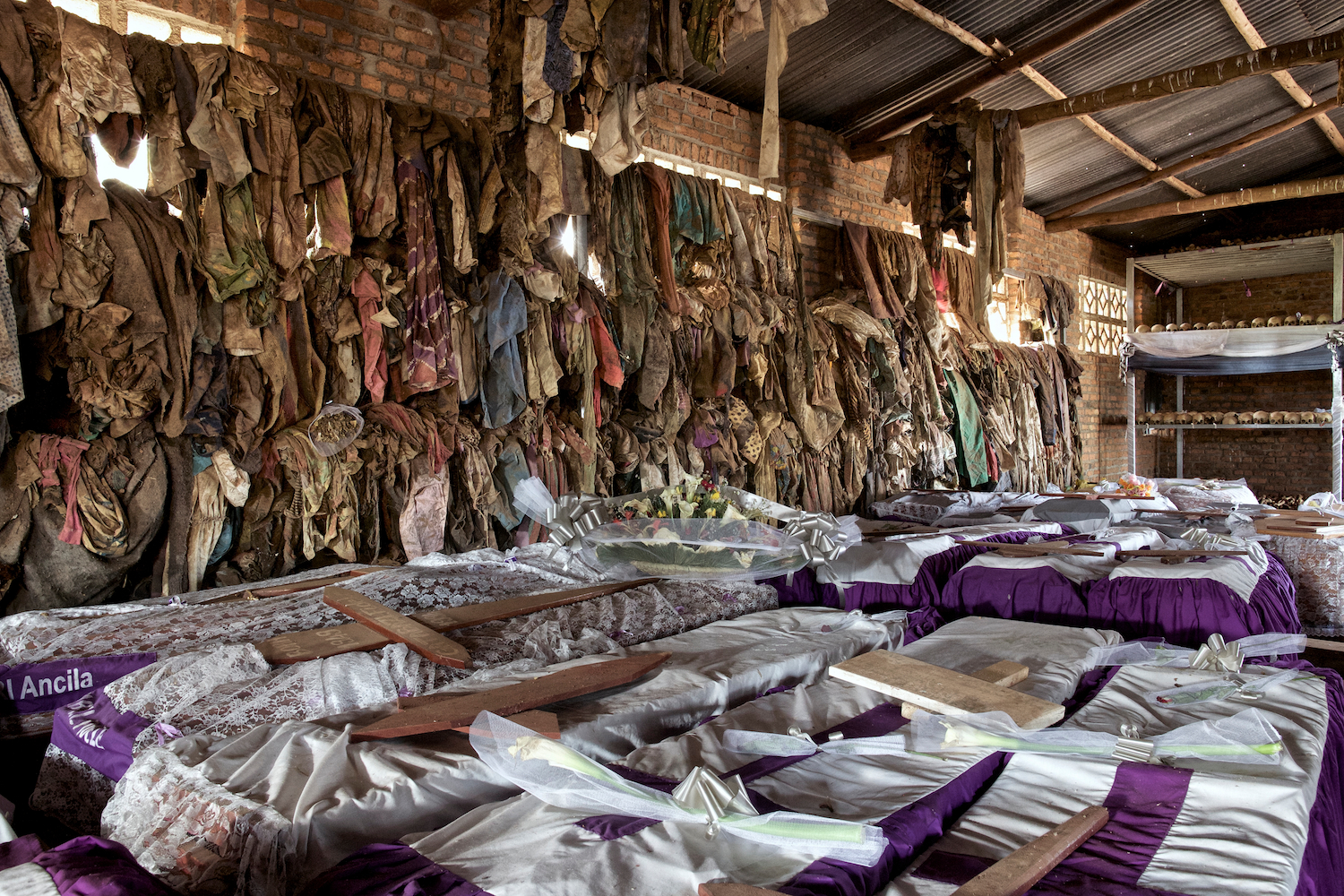
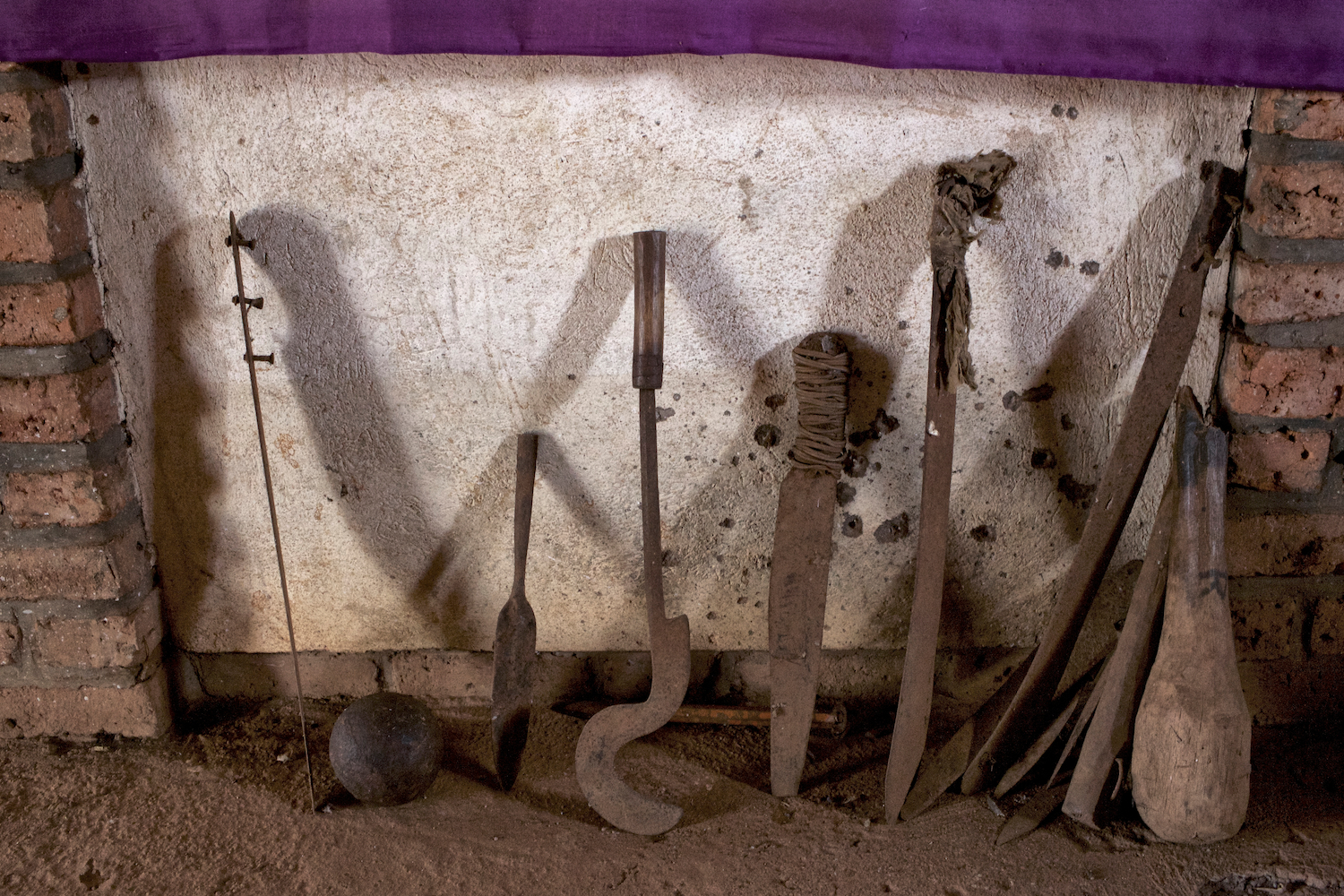
The Ntarama Church is the site where some of the most brutal killings of the 1994 Rwandan Genocide took place. The church at Ntarama was seen as a safe haven by almost 5000 people, many of whom were women and children, who went there for sanctuary. But Ntarama was not a safe place. The victims of the genocide remain there, their bones still strewn with lifeless chaos where they fell over 20 years ago. Their belongings cover the floor; clothes, suitcases, a child’s white sock - the last remnants of a desperate flight for life.

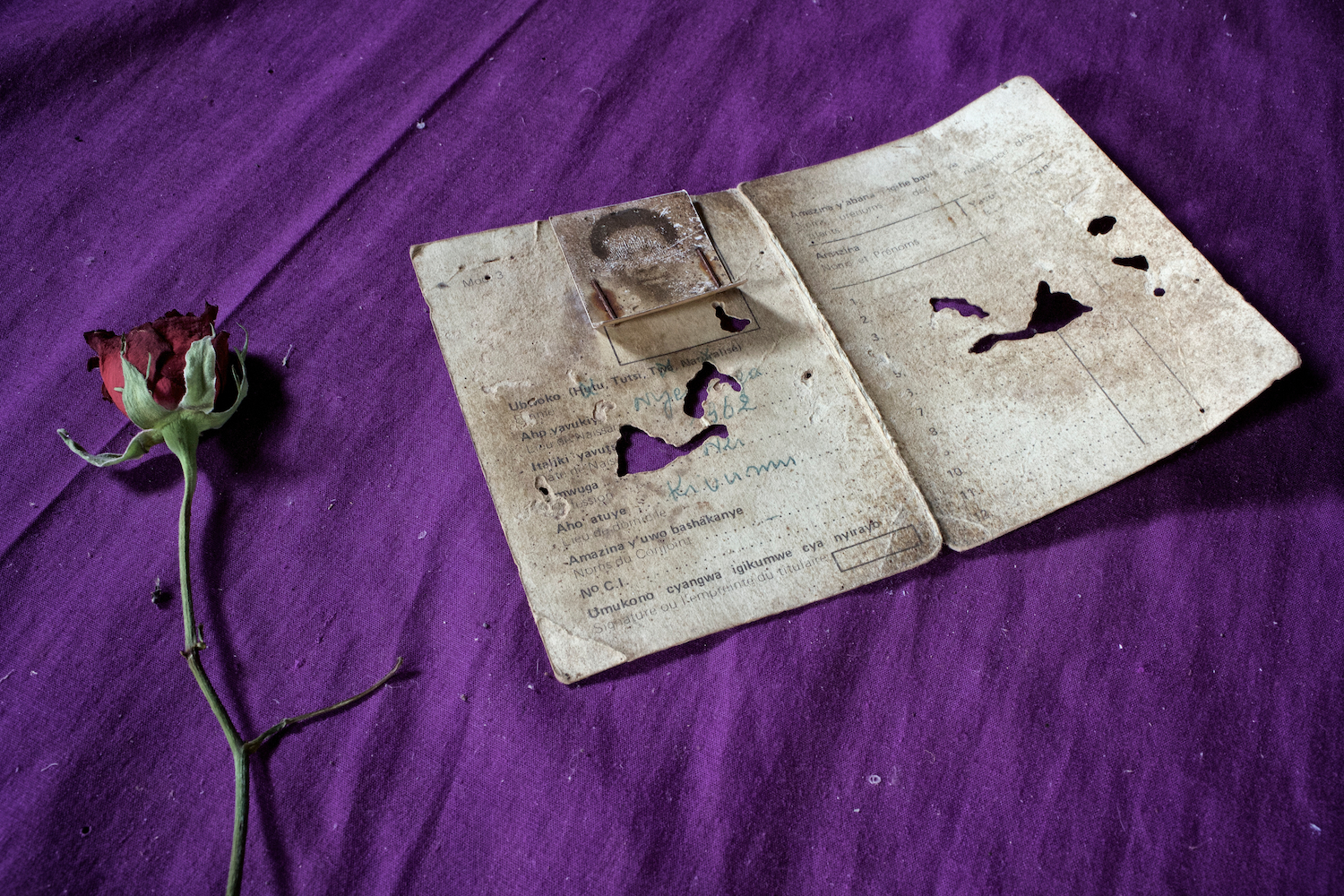
The Ntarama Church is the site where some of the most brutal killings of the 1994 Rwandan Genocide took place. The church at Ntarama was seen as a safe haven by almost 5000 people, many of who were women and children who went there for sanctuary. But Ntarama was not a safe place. The victims of the genocide remain there, their bones still strewn with lifeless chaos where they fell over 20 years ago. Their belongings cover the floor; clothes, suitcases, and this burnt remnant of the dreaded passbook used to identify Hutu and Tutsi. All citizens had to carry them. The Interahamwe used them with a vengeance to cull Tutsi for slaughter. Ntarama Memorial Church Ntarama, Rwanda

The Ntarama Church is the site where some of the most brutal killings of the 1994 Rwandan Genocide took place. The church at Ntarama was seen as a safe haven by almost 5000 people, many of who were women and children who went there for sanctuary. But Ntarama was not a safe place. The victims of the genocide remain there, their bones still strewn with lifeless chaos where they fell over 20 years ago. Their belongings cover the floor; clothes, suitcases, and this burnt remnant of the dreaded passbook used to identify Hutu and Tutsi. All citizens had to carry them. The Interahamwe used them with a vengeance to cull Tutsi for slaughter. Ntarama Memorial Church Ntarama, Rwanda

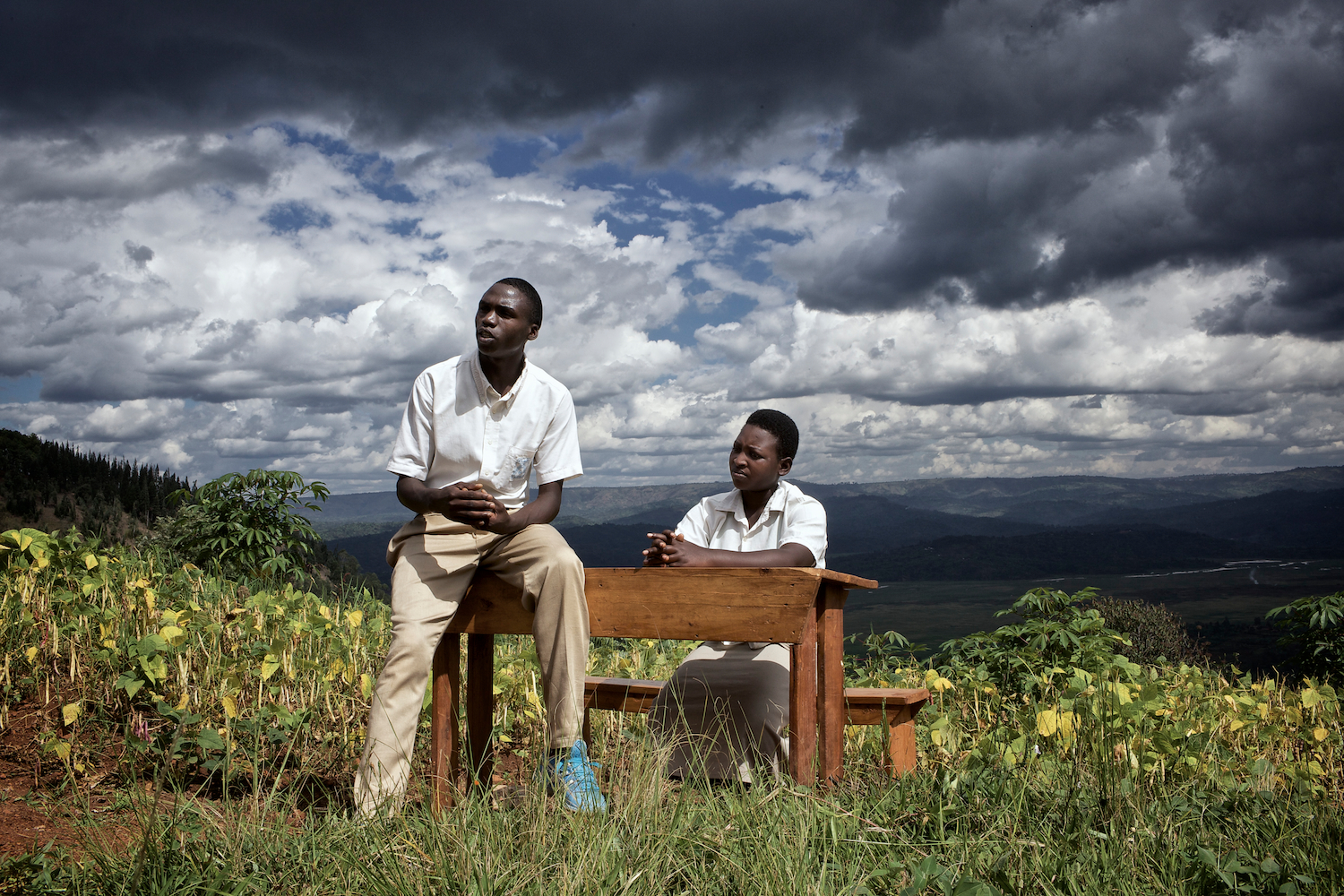
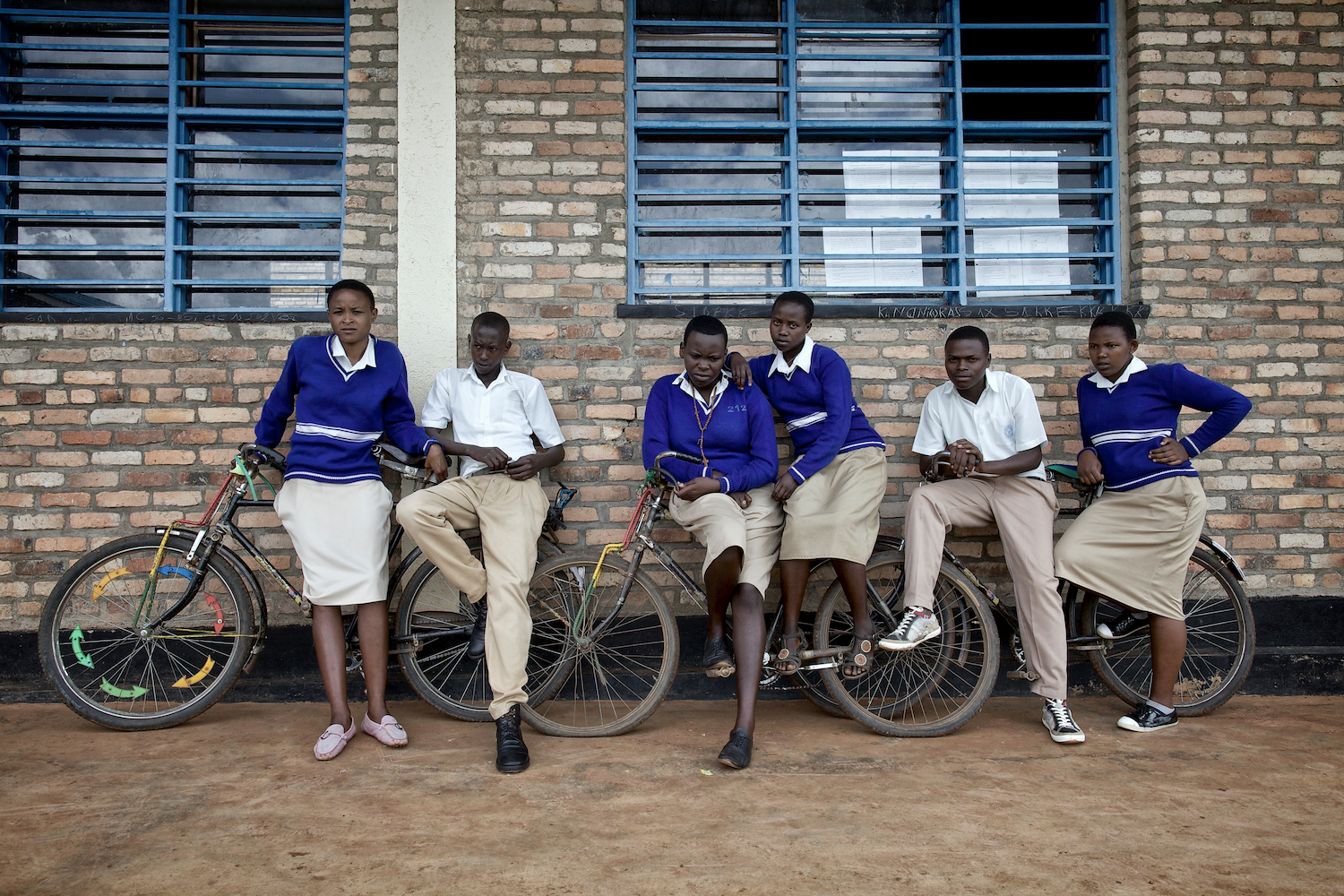
Students attending the Magi Secondary School, discuss their experience of the genocide and the importance of embracing a philosophy of reconciliation and peace, to abandon the hate evident during the genocide of Hutu against Tutsi. They say in unison; “We are ‘Rwandese’ united, not a divided clan. Left to right: Jean-Pierre Ntasoni: “My dream is to live in a Rwanda that has freedom and nurtures humane people who look after one another. I feel the youth of Rwanda has a major role in eradicating the genocide philosophy.” - Alice Ukwibishaka: “From a very early age my family warned me never to speak to those neighbours who turned on us and committed unspeakable atrocities of terror. They told me even though the genocide was over, Hutu still harboured hateful feelings, could rise up again and create another genocide.The lesson I have learned form the genocide is since the youth played such a pivotal role in destroying our country, our generation must play an equal role in rebuilding it.”

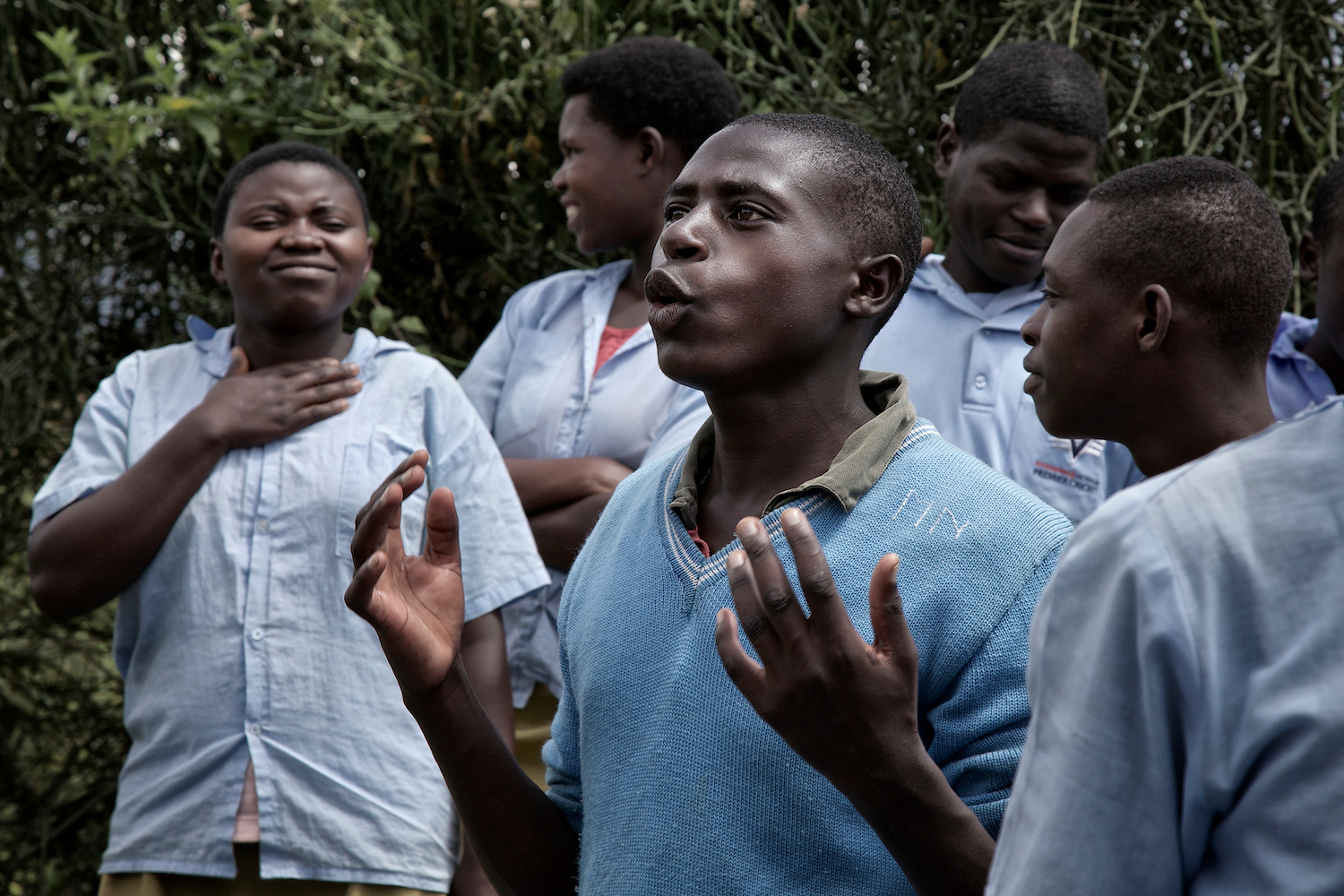
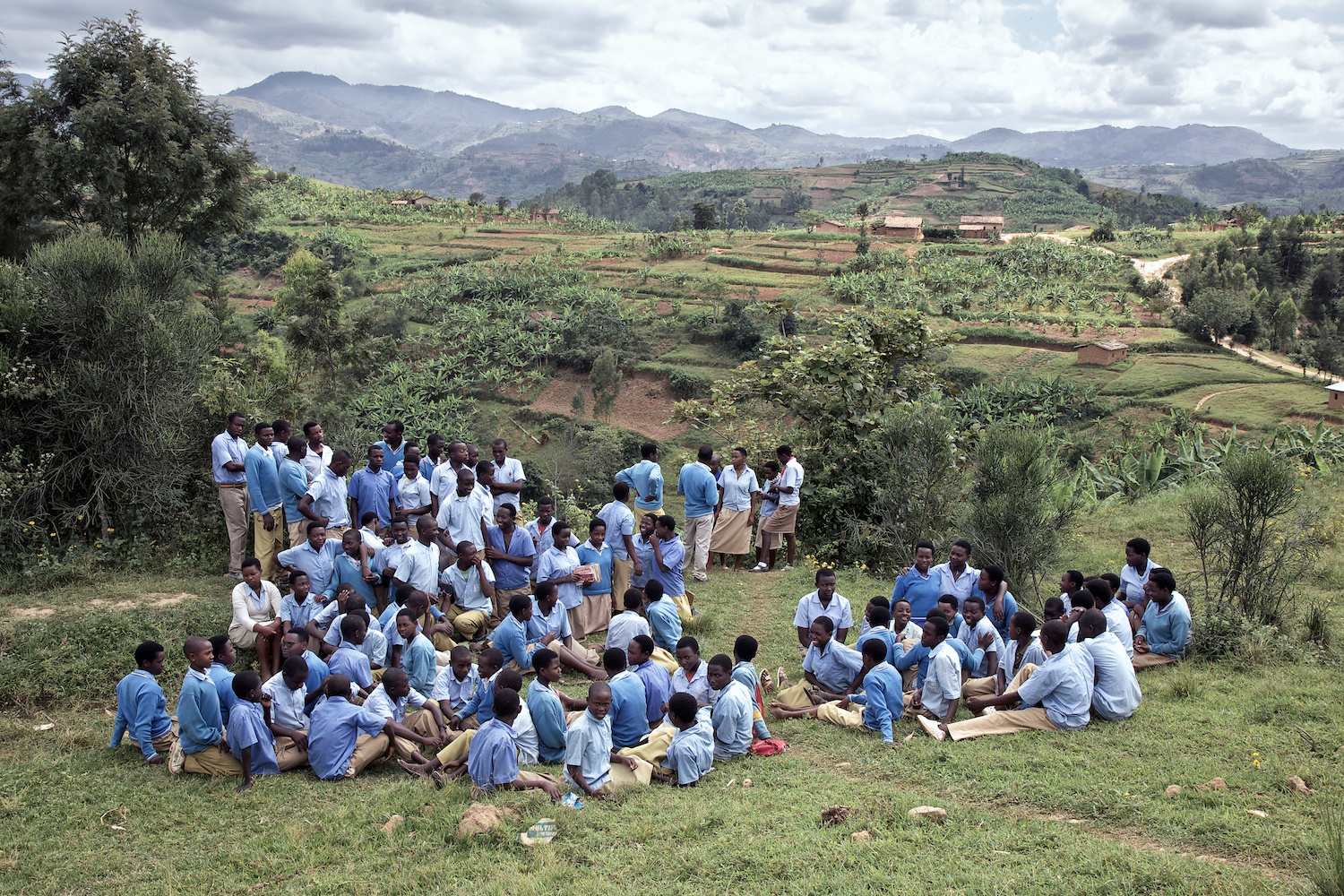
The Kigali School peace club in Nyange, a remote region in Rwanda was formed less than a year ago by International Alert, boasts more than 50 members. Gathered together on the rolling hills of the school campus, the students dialogue about the causes of the genocide, and the importance of creating a mind-set of being a united nation, not a divided clan that fueled the hatred between Hutu and Tutsi. Here are some of their thoughts: “We must Love one another because love cushions conflict” “We need to critically think about things we are told to do and not obey blindly” “When people are united, and work towards a common good, it reduces a rationale for war”

The Kigali School peace club in Nyange, a remote region in Rwanda was formed less than a year ago by International Alert, boasts more than 50 members. Gathered together on the rolling hills of the school campus, the students dialogue about the causes of the genocide, and the importance of creating a mind-set of being a united nation, not a divided clan that fueled the hatred between Hutu and Tutsi. There were many definitions of peace discussed, but a universal theme stated: ‘Peace means respect’

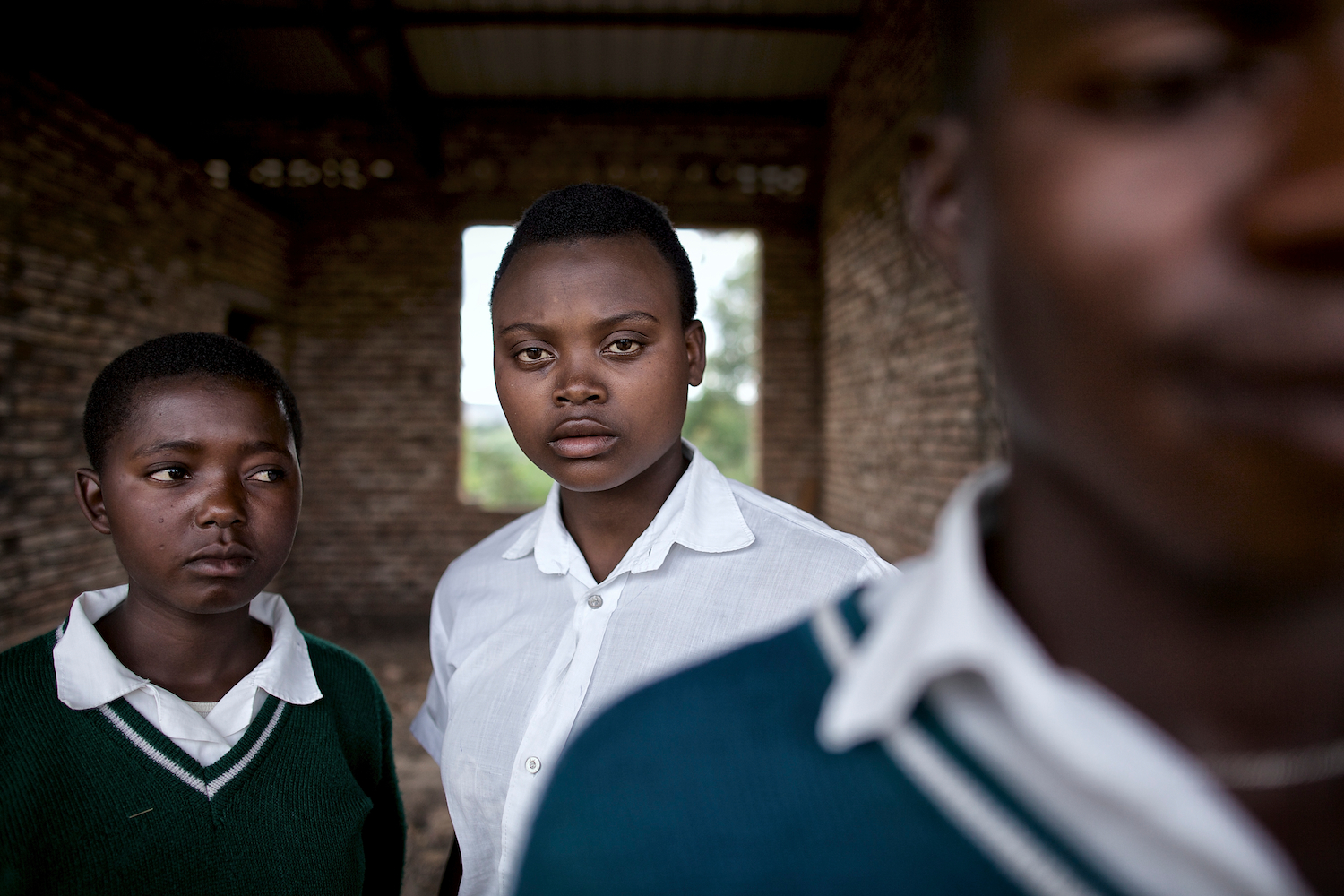
Students at the Groupe Scolaire Cyumba gather outside a new classroom being constructed. They take pride in the quality of their education and facilities available at their rural school. From left to right: Louise Dusabimana : “My ambition is to be a high ranking member of the government in the president’s office; to be a leader and initiate policy programmes to bring clean water and electricity to Rwanda, especially those living in remote regions. Donata Mutangamundu: “The greatest lesson I learned from the peace club was how to forgive. I also learned how to say sorry and to be open with one another, which created trust.” - Everest Shumbusho: “My father organised the slaughter during the genocide. For his crimes he was tried, found guilty and sent to prison after the war. Twice a week I walked 28 kilometers to bring him food. My inspiration is to become a doctor; whenever I see sick people I feel compelled to help them.”

“I was born in jail. My mother was incarcerated for her crimes during the genocide war, which she did not commit. I learned from my grandmother, that my mother was falsely accused. She said the reason she was arrested was because she was temporarily living in a house and was unaware there was a butchered woman stuffed in a suitcase. My mother hadn’t murdered the woman but a man in the community who fancied her had because she had rejected his advances, which made him angry, so he murdered a wom- an and made up the story to frame my mother. Finally, she had a Gacaca trial and was found innocent. Sadly I was denied my mother’s love for the 12 years she spent incarcerated in jail. The International Alert peace club has been instrumental in teaching me to be community minded, . It taught me the idea of social responsibility, especially caring for orphans and widows from the genocide. For example, we learned how to help widows with their loneliness. My dream is to study medicine and specialize in research to cure AIDS.” ‘Peace is not having problems in your life’ - Goreth Twizerimanaa

“My father was murdered during the genocide by a Hutu neighbor, arrested but released. We know he paid off the officials and that is how he avoided being in jail. The lesson I garnered from the Interna- tional Alert peace club is that everything is about ideology, therefore people should always think about consequences before they act. My dream is to improve the standard of living for my family. I plan is to study computer engineering to facilitate my dream. Mark Zuckerberg, the founder of Facebook is my inspiration.” ‘Peace is having security in whatever you do’

“I recently attended a beauty school sponsored by International Alert but now I find it difficult to secure employment because I do not have the funds for an internship, which is the common custom for graduates. Without an internship, I cannot get a job which is a sadness because I went through the training. Everyone should join a peace club where you can learn about the effect of discrimination and how it destroys lives, destroys nations, how it leads to conflict and dismantles relationships resulting in war; not just here in Rwanda, but everywhere in the world. “ ‘Peace means happiness’ - Germaine

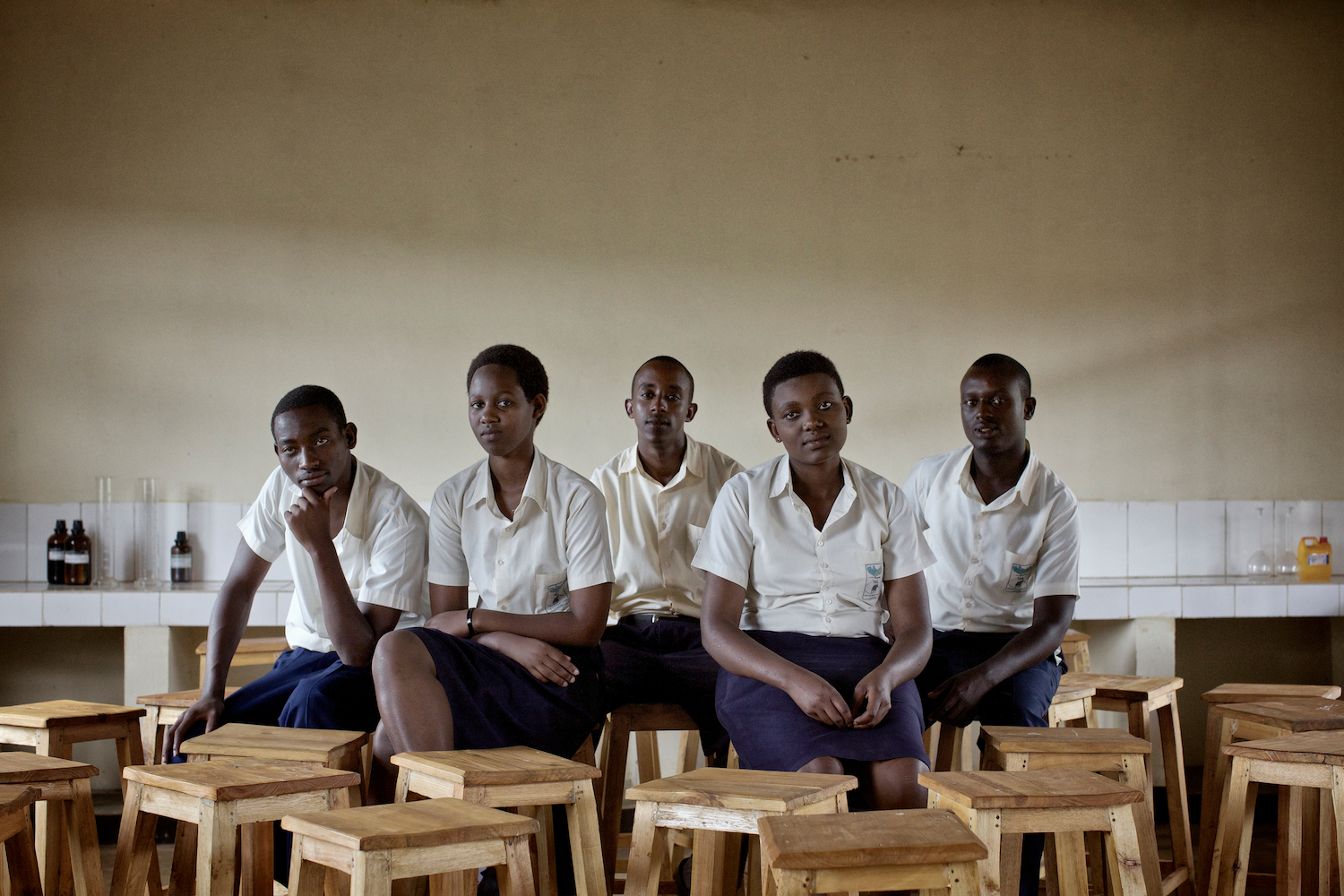
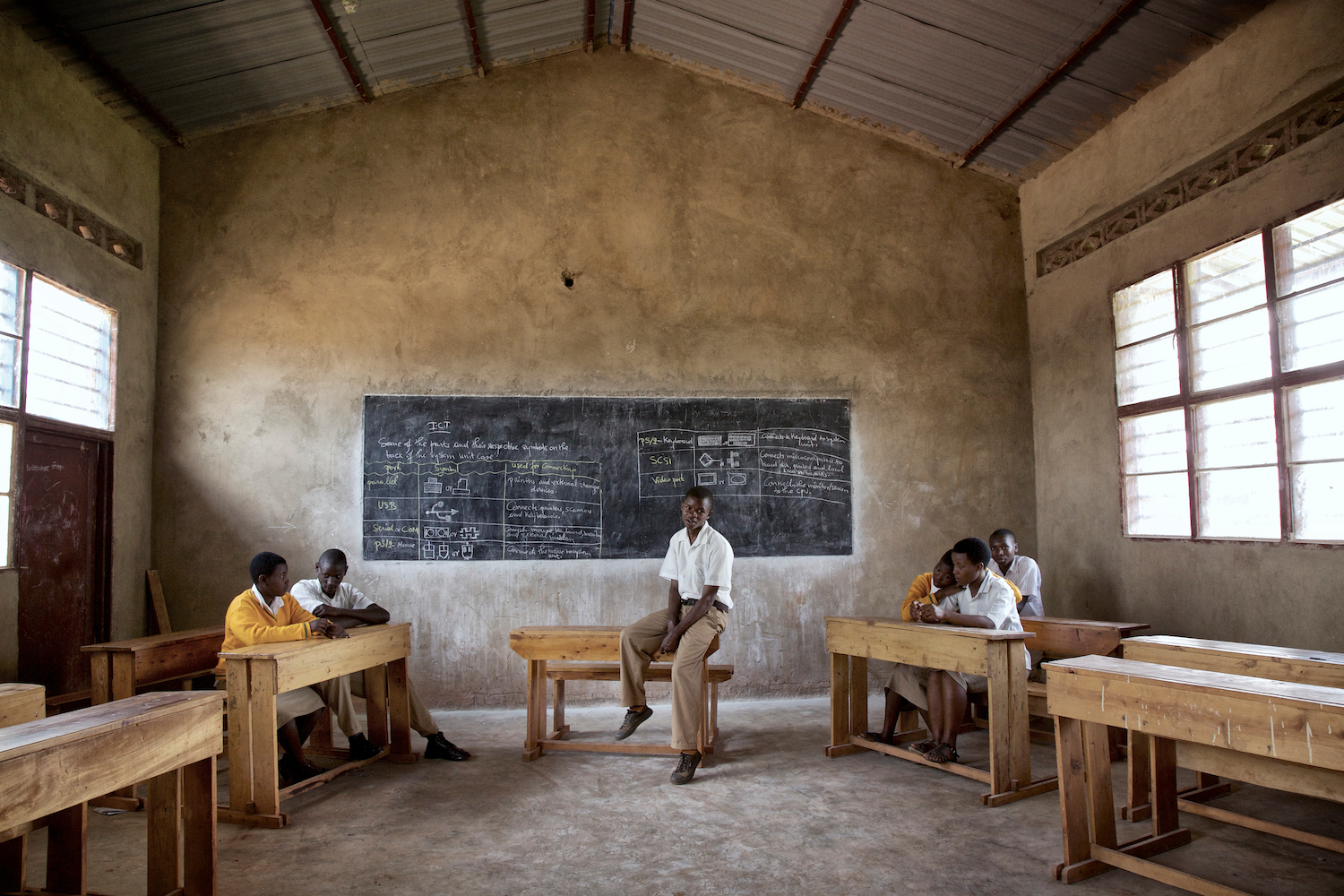
At the Star Secondary School students gather in their chemistry classroom for a group portrait. Left to right: Frank Gakuba: “My aim is to become a politician, a good leader setting an example by positive action to help the people. I want to be known as a leader that affects change for the good” - Jeanne Umutomi: “The genocide was a horrible time for all Rwandese, but we must not wallow in pain forever as there will be no future if we cling to the past. We may not be able to change our history, but we can change” - Wyclef Kayiranga: “Peace is freedom” - Denise Tuyisenge: “Peace is free- dom” - David Byiranga: “The youth of ’94 were known as the butchers, 20 years on, the youth of today will leave a legacy about the positive change they made to build a strong society based on humanity”.

“Before I joined the International Alert peace club in my community I thought I could never share a seat with someone who murdered my family in the Rwandan genocide. The club taught me how to forgive and unite with other people. I learned to let go of hate and work with my neighbours for a better future. My aspiration is to become a mechanic, as I am passionate about cars.” ‘Peace means living a calm life’ - Patrick Shyaka, genocide survivor’s child

“My knowledge of the genocide is small, my mother said it was because Hutu were killing Tutsi as they wanted their property. I actually do not know what genocide means. Two years ago I was forced to leave school because my mother suffers from depression and acute trauma since she escaped the cutting and killings in the war, and she needs constant care which I have to provide. The trauma she suffers is not just from the aftermath of the genocide, but also the ‘taunts’ from our neighbors. She believes they practice witchcraft to harm her because the man of the household participated in the killing during the genocide. We are always afraid”. “Peace is not having problems” - Olive Murebwayir

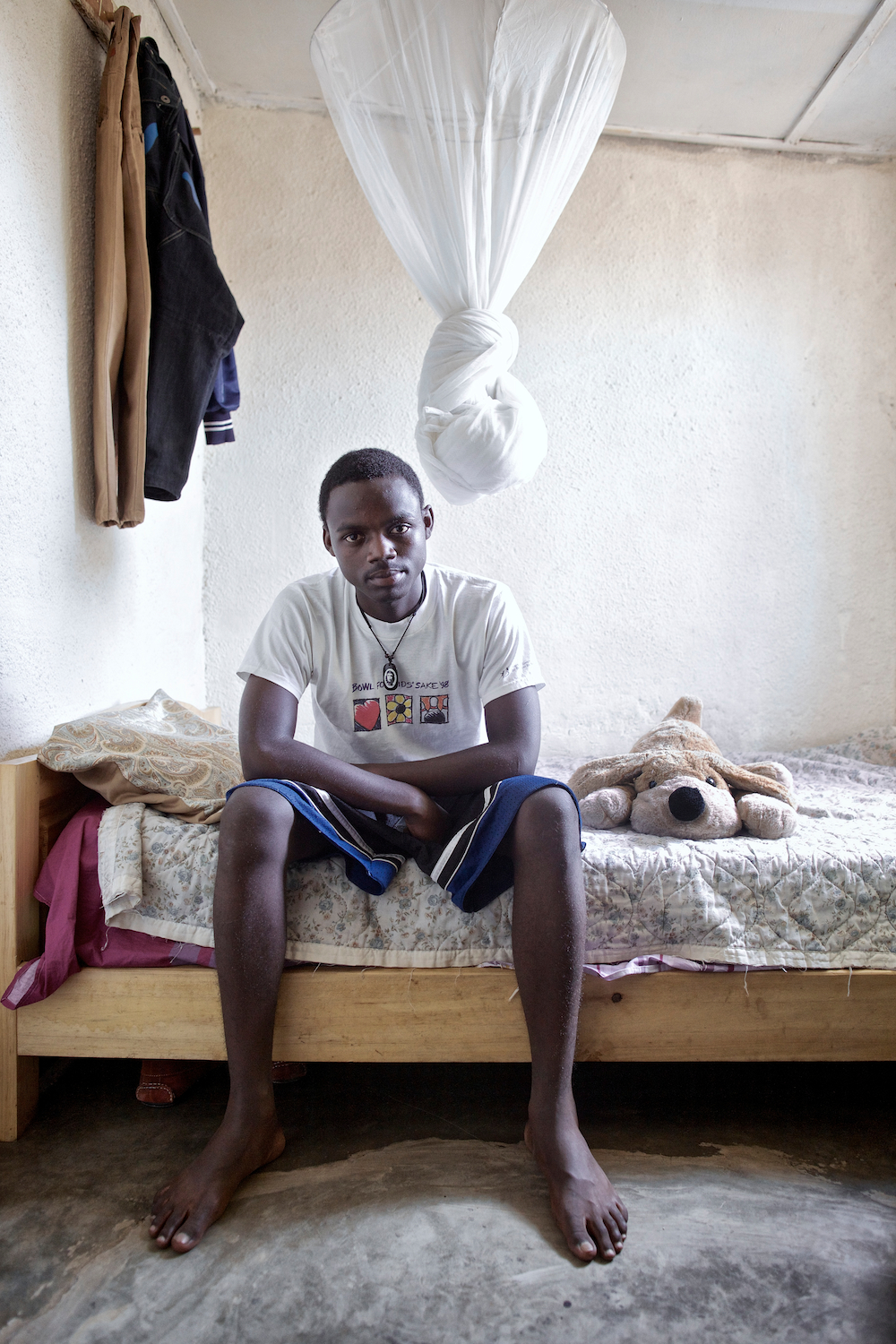
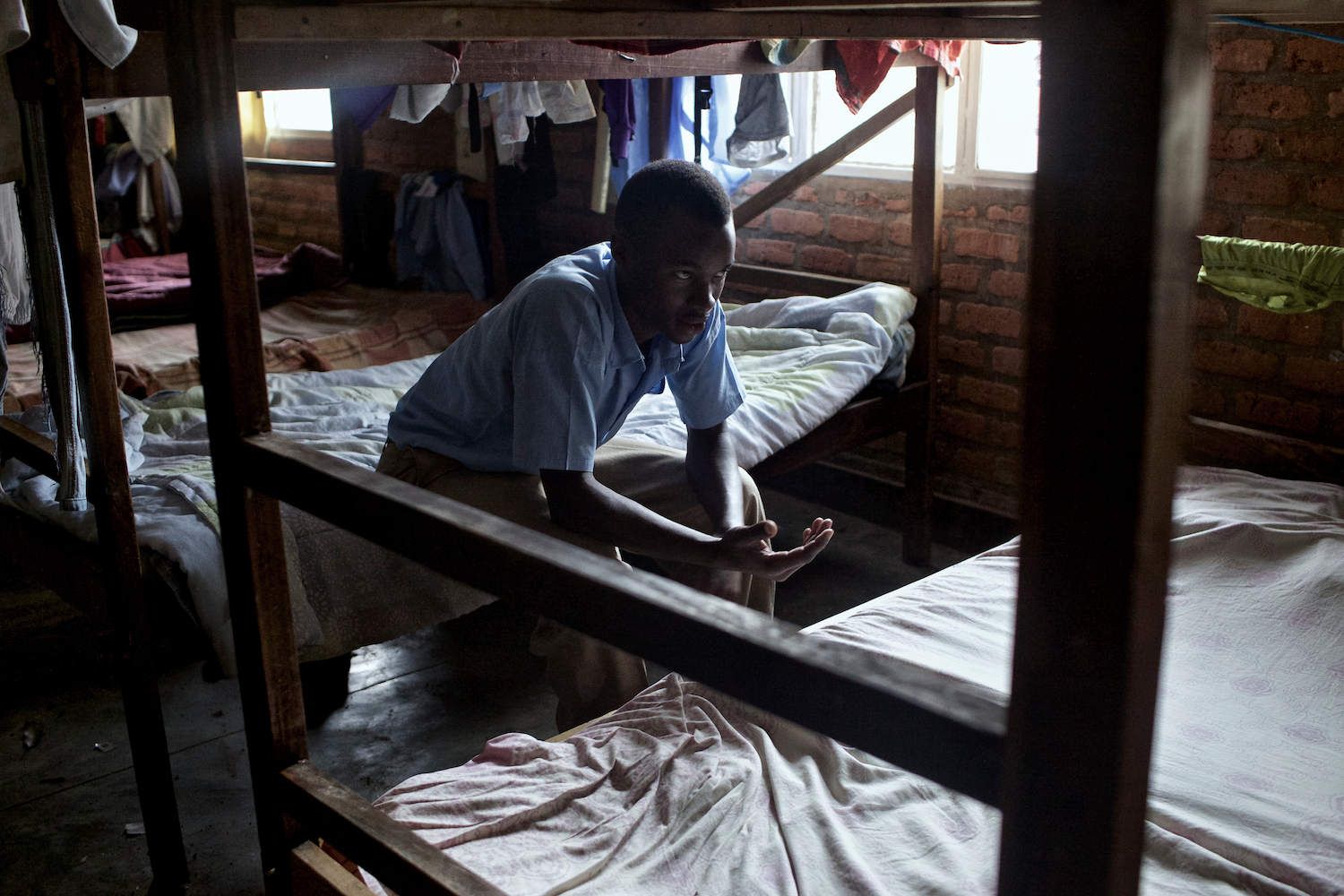
Jean-Marie Rene Mukunzi, perched on his bed in the boys dorm at the Adec Ruhanga Secondary School chats about his views of the Rwandan Genocide, lessons learned and his aspirations. “I was four months old when the genocide exploded. My parents were a mixed marriage; my mother Tutsi and father Hutu. My mother was a highly respected judge, tragically she was slaughtered by my parent’s Hutu neighbour who joined the killing fields. My father and I were spared because of our Hutu ethnicity. My dream is to become prosperous and leave poverty in the past. I plan to be a government leader because my fellow students tell me I possess natural qualities for hon- ourable leadership. As a voice of the youth of our country, I would recommend all Rwandans abandon genocide idealogy and embrace humanity over material wealth.” ‘Peace is the absence of war and conflict’

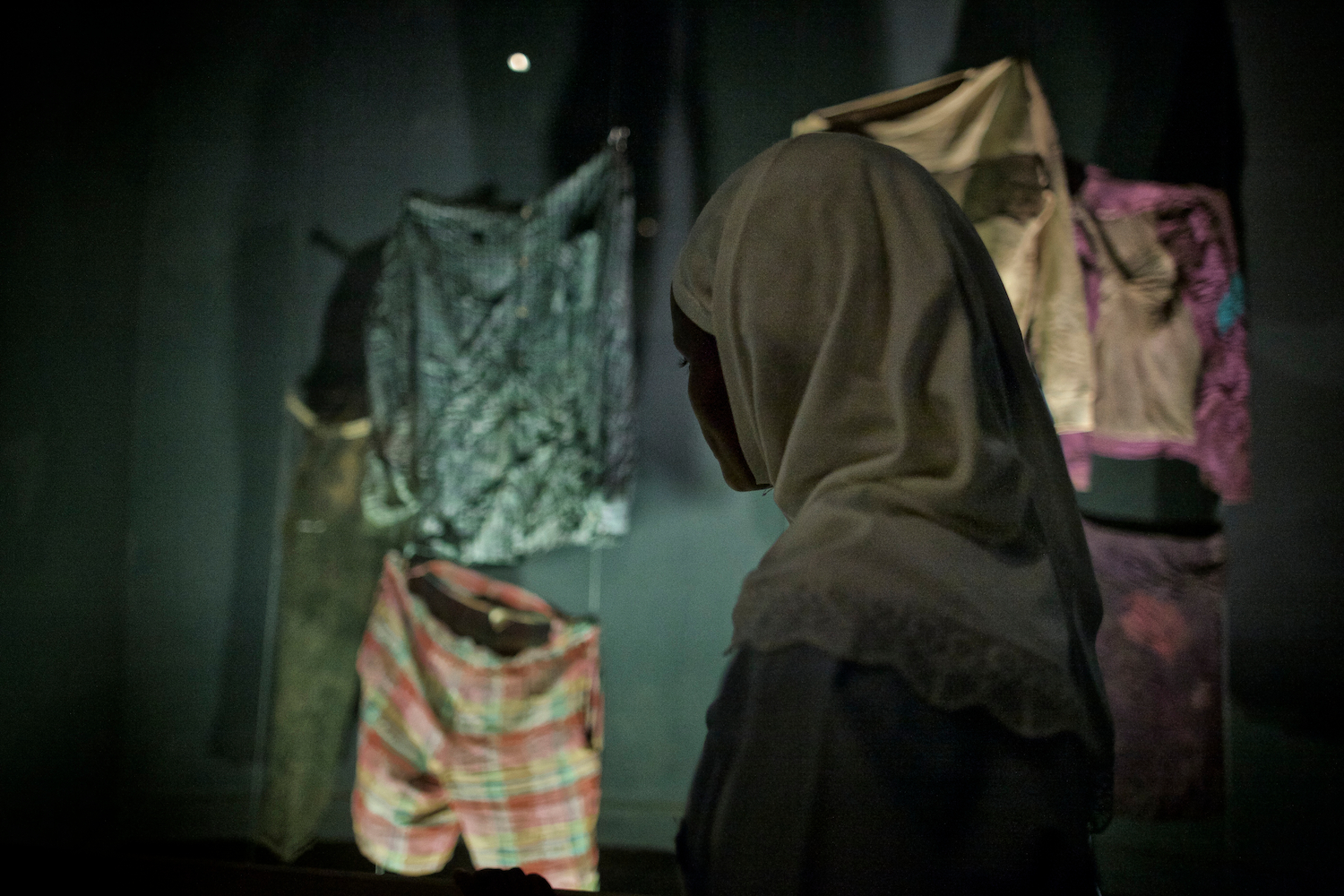
A student from the Ecole Technique Muhazi II Kimironko visiting the Kigali Genocide Memorial gazes on the display of clothing found on the victims during the slaughter. Many victims were stripped of their clothes by the perpetrators as a way of humiliation. They also took the clothes for financial gain and personal use.

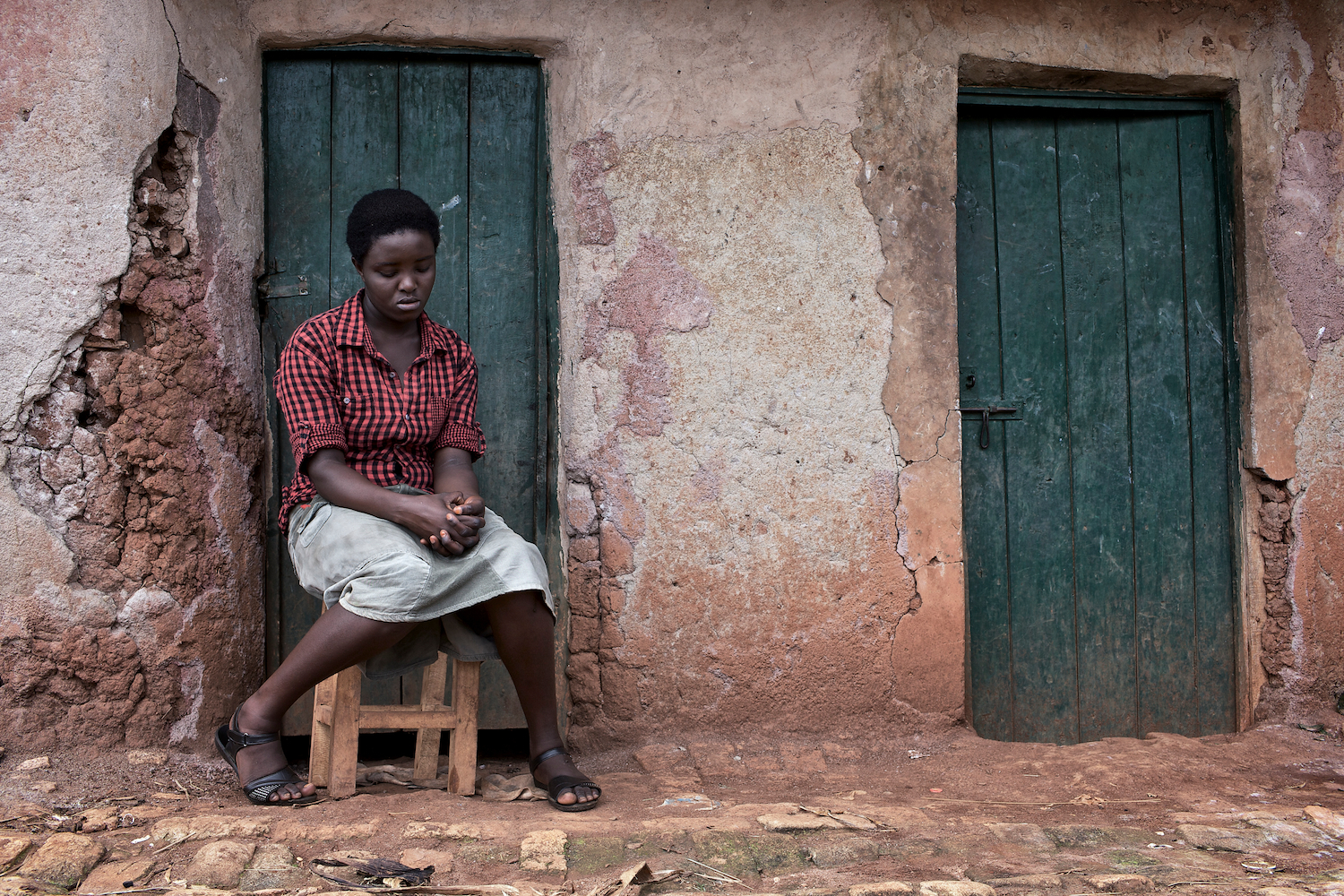
“I am a child of a brutal rape during the genocide which makes me ashamed, especially since my mother abandoned me after she remarried, because her new husband did not want me in their home. I then lived with my aunt and uncle but always felt I wasn’t part of their family. Now I live with my cousin who has a shop where I help out. I had to leave school when I was 11, as there were no funds. My life is ruined because of the genocide. My future is dim because I cannot pursue my dreams.” ‘Peace mean loving one another’ - Fideline Niyomugenga, child of rape

“Growing up as a child of a perpetrator imprisoned in jail was challenging and lonely for many children born during the era of the Genocide War especially me. My father died in jail. I am sad I could talk to him and ask him whether he really was guilty, so I will never know the facts. What I would like to ask him is how he had the courage to kill another human being. I would like to be a doctor if only I could access education. Being a doctor gives you the chance to save lives, to help people. I think if I could save some lives it would remove the wound I carry from my father’s legacy as a killer.” ‘Peace is having confidence in knowing who you are’ - Evaliste Bunani, perpetrator’s son, 22 years

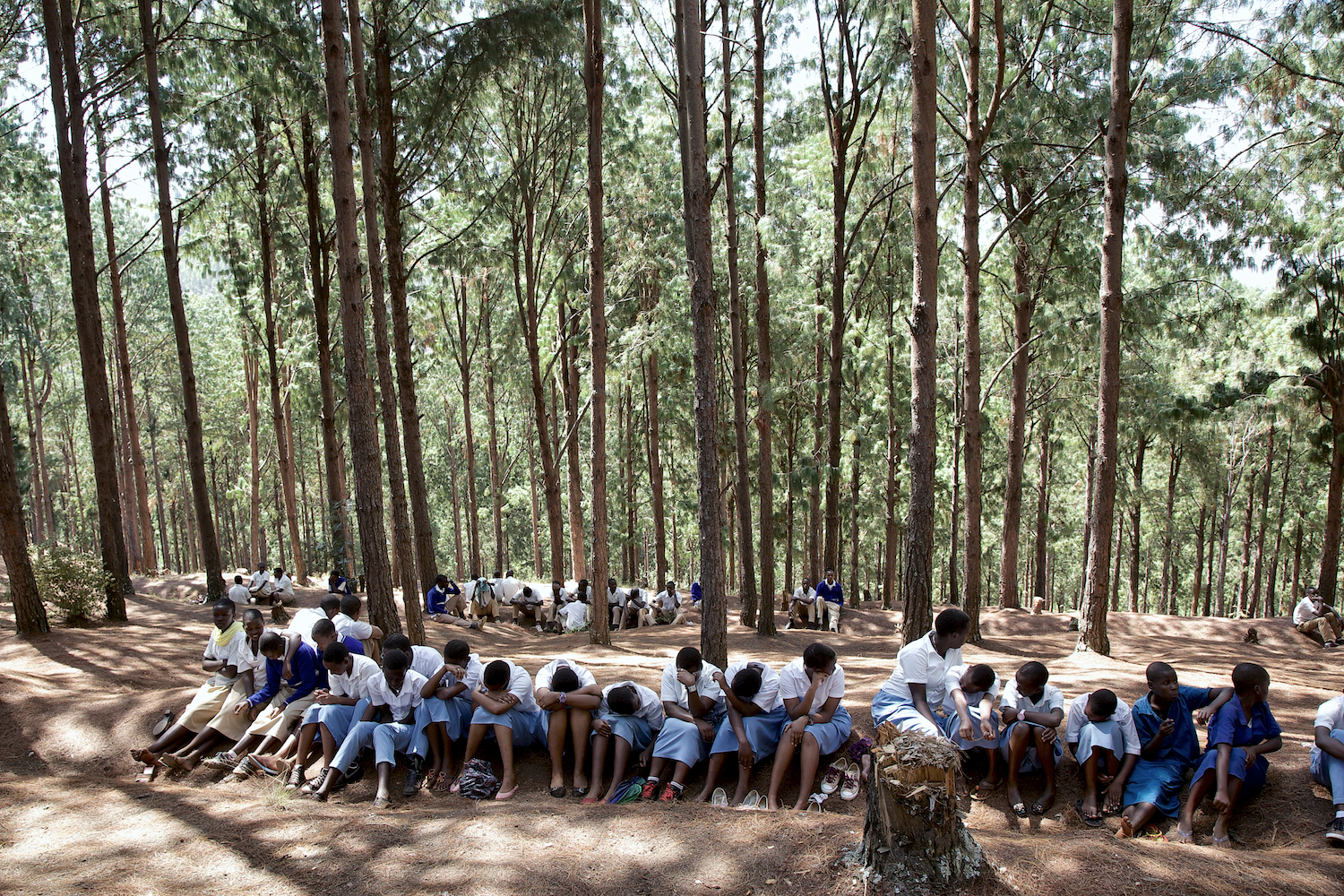
Schools throughout the Save district gather in the wood for a joint commemoration to honour all the teachers murdered during the genocide.

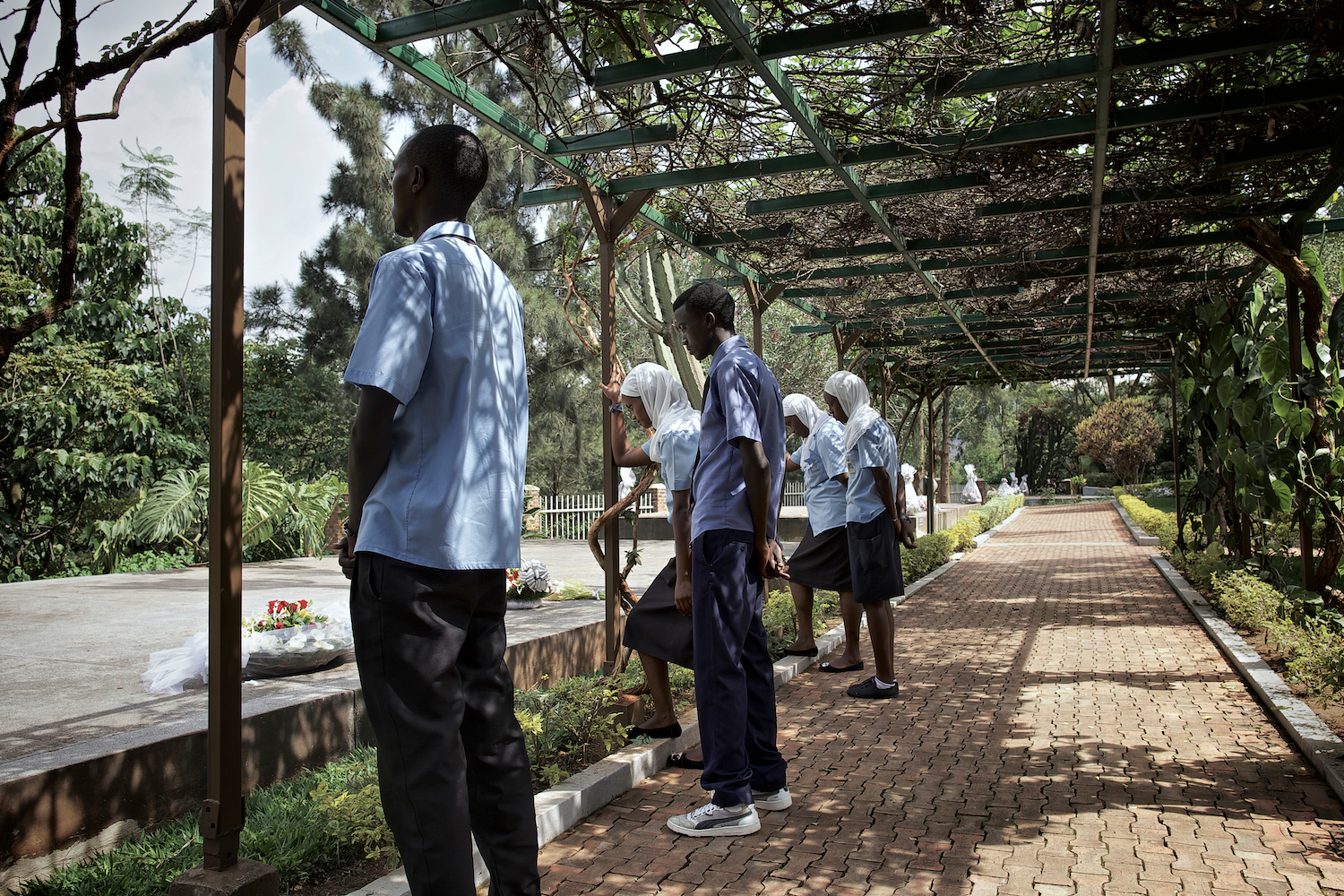
Students from the Ecole Technique Muhazi II Kimironko visit the Kigali Genocide Memorial to pay respects to lives lost during the Rwandan genocide.

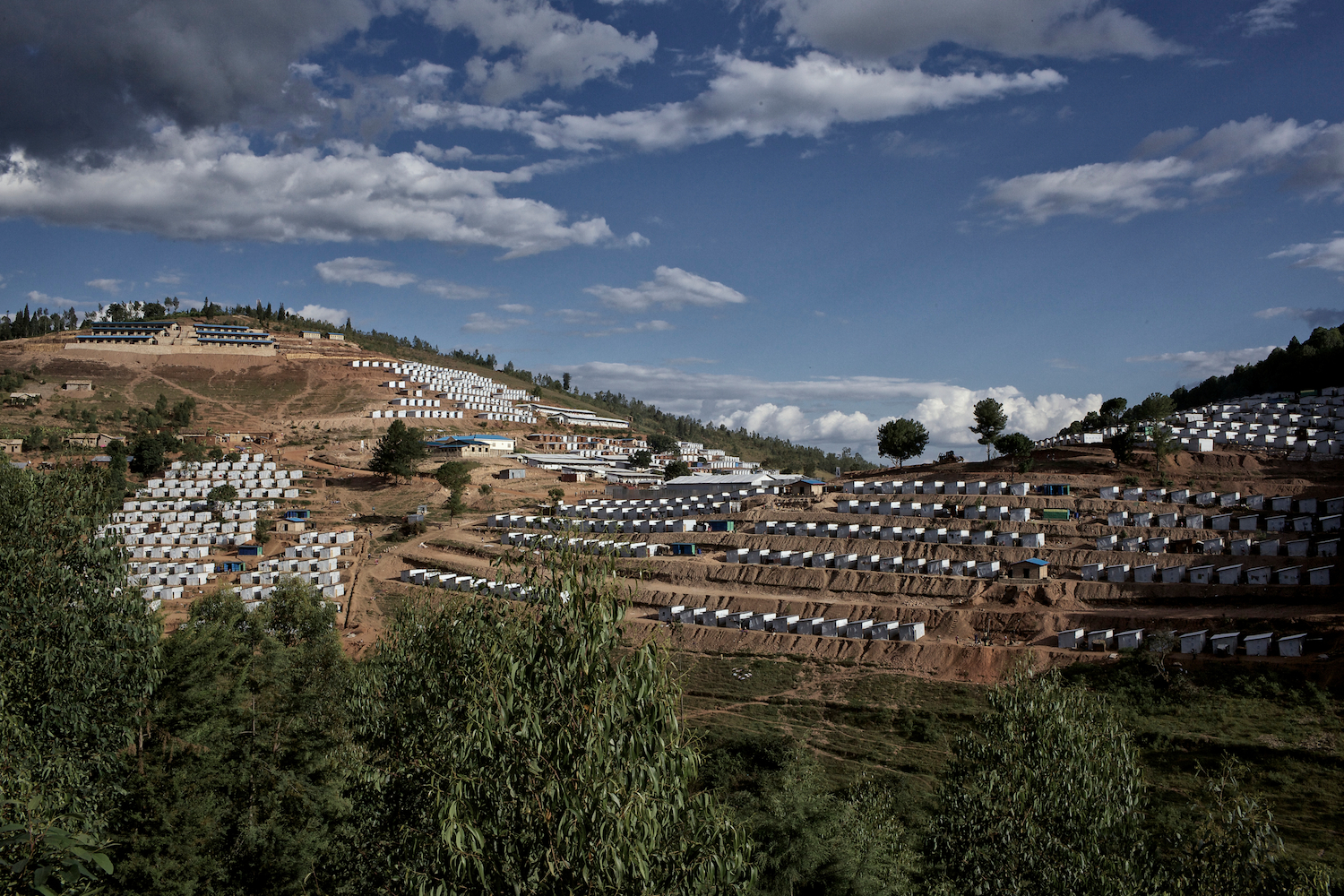
Mugombwa Refugee Camp is a habitat for refugees. UNHCR is a United Nation Agency that has partnered with the government of Rwanda to provide assistance to Congolese who have returned to Rwanda. Since it opened, thousands of refugees have settled in the camp, which provides a hospital, and schools. Camps like this sadly become a permanent home for many who migrate there.

Members of the International Alert peace club at the Save Secondary School gather discussing their life post genocide - they see themselves as Rwandese because they believe it is unity, not division and that is the only path to rebuilding their shattered country after the war. Left to right: Chantal Uwemeyimana: “I plan to be an entrepreneur, managing my own business, being in control.” - Christian Tuyisenge: “Peace is when you have no hatred in your heart” - Valentine Tuyisenge: “I grew up in a cloud of darkness with the knowledge that my father was a brutal killer incarcerated in jail for his crimes.” - Saveline Nambazimana: “Peace is living in harmony with others” - Janvier Usabyeyezu: “I hope to become a journalist so I can write stories to change the world to be a better place than how I found it.” - Pauline Mushimiyimana: “Peace is the absence of hunger.”

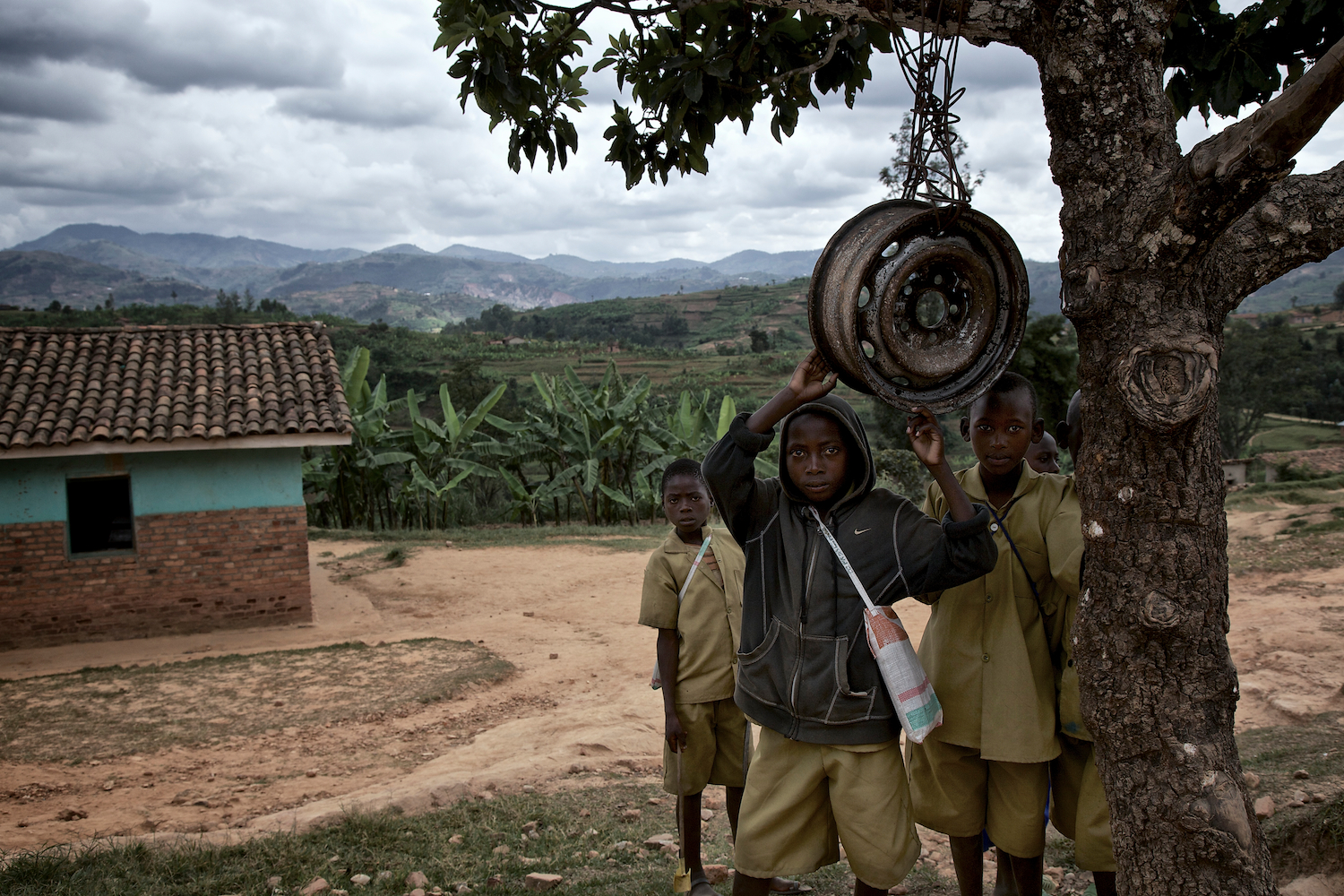
A younger student at school hammers a metal inner ring from a tyre to alert the end of their morning break.

Students at the Janja Secondary School share their personal stories of the genocide and their dreams - Left to right: Shema Milliam: “Although I have never flown in a plane, I want to become a pilot because it gives you dignity.” - Francois Ngabonziza: “My aim is to be a politician who has the reputation of listening so that I can provide support with practical solutions for their problems” - Jean-Claude Ndayambaje: “Running inspires me because I feel free and relaxed. Teaching is my ambition, as I like the idea of imparting knowledge.” - Claudette Hakizimana: “To eliminate the chance of another genocide occurring we must eliminate anything that leads to discrimination and violence because if we do not, our future is doomed.” - Adeline Uwimana: “Peace is having a good relation- ship with one another.” - Fidelie Ndayishima: “I want to be a teacher because I believe being a teacher has the capacity of shaping young minds for the good.”

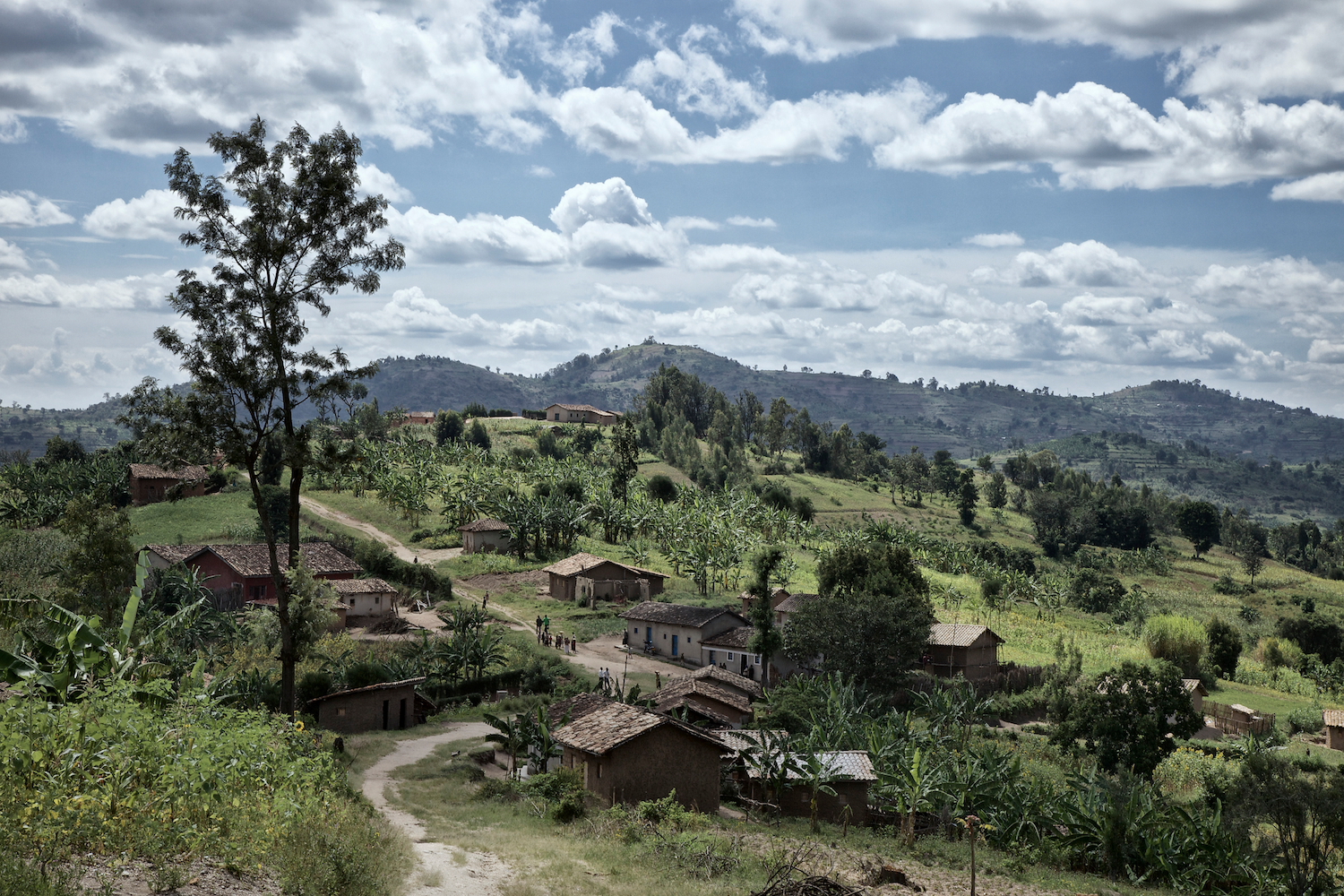
A typical vista of a rural village. Rwanda is known as the land of a thousand hills.

“Growing up as a son of a Hutu militant created suspicion and stigma amongst my neighbours. I was extremely unhappy, isolated, as I could not be naturally friendly with those who knew my family history. They didn’t trust me. I felt I was being dragged into my parent’s baggage. Through International Alert’s peace club I learned how to appreciate the importance of tolerance and reconciliation to forge a future, to be accepted for who I was and not the history of my family.” ‘Peace mean freedom and security’ - Jean-Pierre Ntasoni